
Filter press cloths in polypropylene, polyester, and nylon — custom weaves and micron ratings for excellent cake release and long service life, fitting chamber, membrane, and plate-and-frame presses.
Filter Press Cloth Catalog - Custom Industrial Filter Cloth

Sludge Dewatering Filter Cloth | Efficient Filtration for Municipal & Industrial Wastewater Treatment | Custom Filter Press Cloth
Food-Grade Filter Cloth | Juice, Edible Oil, Syrup Filtration
Versatile Filter Cloth for Multiple Industries | Filter Cloth for Chemical Industry | Fine Chemical Filtration | Custom Filter Cloth
Filter Cloth for Mining | Concentrate & Tailings Dewatering
Corrosion Resistant Filter Cloth | Filter Press Cloth, Durable & Easy to Clean
High-Efficiency Industrial Filter Cloth | Solid-Liquid Separation Solution
Custom Filter Cloth | Versatile Filtration for Multiple Industries

Filter Press Cloth
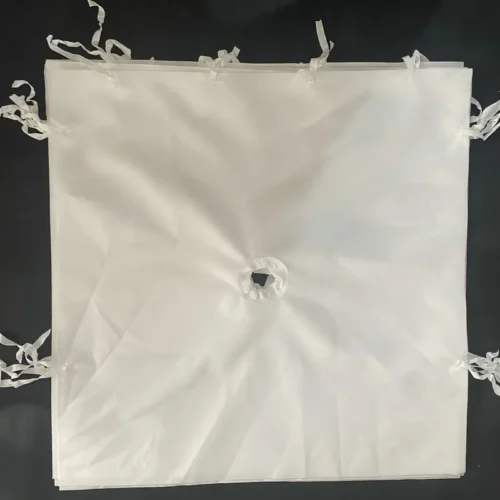
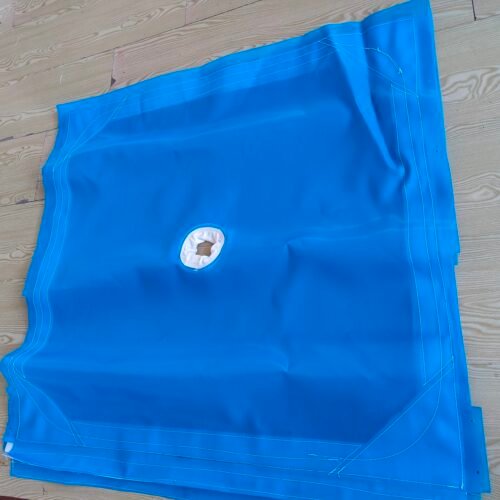
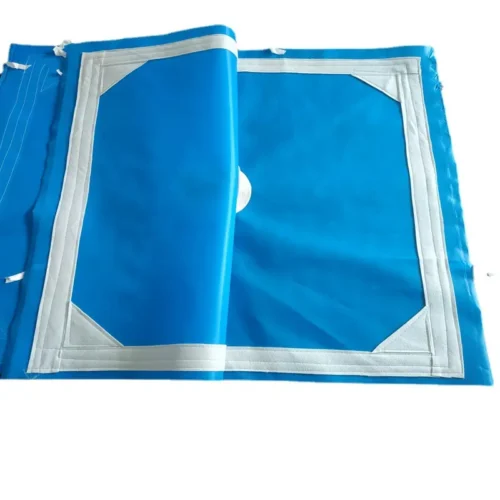
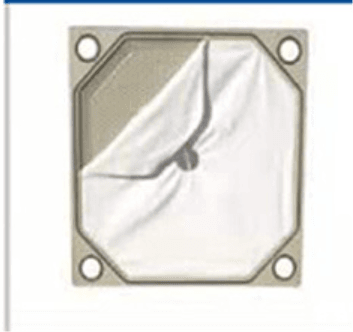
Quick answer: Filter cloth is chosen by four things: fibre (PP, PA/nylon or PET), weave (monofilament, multifilament or staple), air permeability, and how it seals to your plate. Get those right and cake release, cycle time and cloth life all follow. Typical service life is 3–12 months depending on abrasion.
How to choose filter press cloth
Most cloth complaints — slow filtration, cloudy filtrate, cake that will not release, cloth blinding after a few weeks — trace back to a specification decision, not to manufacturing quality. Work through these four in order.
1. Fibre
| Fibre | Max temp | Good at | Avoid when |
|---|---|---|---|
| Polypropylene (PP) | ~90 °C | Acids, alkalis, most industrial sludge; the default choice and the cheapest | Strong oxidisers, temperatures above 90 °C |
| Polyester (PET) | ~150 °C | Higher temperature, good dimensional stability, resists stretching | Strong alkali — PET hydrolyses |
| Polyamide (PA / nylon) | ~120 °C | Abrasive duty — best wear resistance of the three | Strong acids; also absorbs moisture and can change size |
2. Weave
| Weave | Cake release | Filtrate clarity | Blinding resistance | Typical use |
|---|---|---|---|---|
| Monofilament | Best | Lower | Best — smooth surface, easy to wash | Coarse, fast-settling solids; mining, stone, ceramics |
| Multifilament | Good | Good | Medium | General industrial and chemical duty |
| Staple / spun | Poorer — cake grips the nap | Best — catches the finest particles | Lowest — blinds fastest | Fine sludge, polishing duty, where clarity matters most |
The trade-off is unavoidable: the surface that gives the clearest filtrate is also the one that blinds soonest. Where filtrate clarity and cloth life fight each other, a monofilament face with a finer backing layer is usually the practical compromise.
3. Air permeability and particle retention
Air permeability (usually quoted in L/dm²/min at 200 Pa, or CFM) is the practical proxy for how open a cloth is. Lower permeability means finer retention and clearer filtrate, but slower filtration and a higher risk of blinding. Rather than guessing a micron number, send a sample of your slurry with the particle size distribution — the d10 value matters far more than the average, because the fines decide what blinds the cloth.
4. Sealing and attachment
The cloth has to match the plate, not just the process. Tell us the plate type and the feed arrangement and the cloth is made to suit:
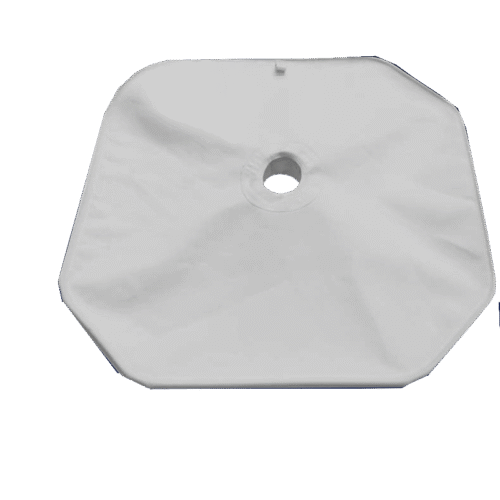
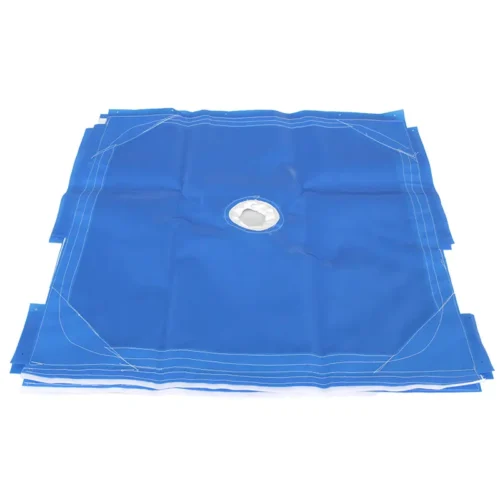
- Centre-feed with barrel neck — the neck must match the plate eye diameter and depth or it leaks at pressure
- Caulked / gasketed — for membrane plates and gasketed chamber plates, where the seal is part of the plate design
- Tie-on or button-fixed — simple and quick to change, common on plate-and-frame presses
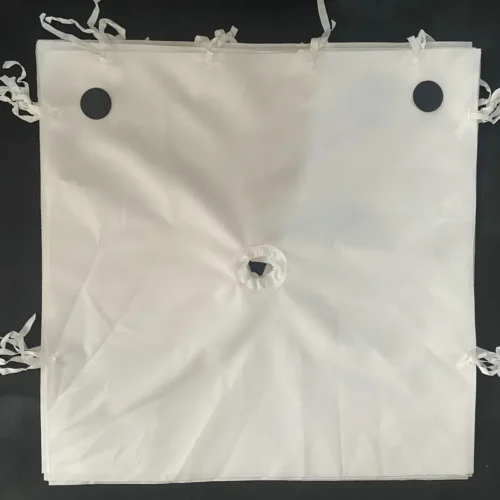
- Corner-feed — hole positions must match the plate exactly
Application guide
| Application | Typical choice | Why |
|---|---|---|
| Municipal and industrial sludge | PP multifilament, medium permeability | Handles polymer-conditioned sludge; good balance of clarity and release |
| Mining and mineral concentrate | PA monofilament | Abrasion resistance and easy cake release at high throughput |
| Stone, ceramic and construction slurry | PP monofilament | Very fine inert solids; needs a surface that washes clean |
| Electroplating and metal hydroxide | PP multifilament, low permeability | Gelatinous fine floc; clarity is critical for discharge compliance |
| Textile dyeing | PET, medium permeability | Elevated temperature and dye chemistry |
| Food, brewery and vegetable oil | PP monofilament, food-contact grade | Must wash clean between batches; cake release matters |
| Chemical and pharmaceutical | Selected per chemistry | Fibre chosen against pH, temperature and solvent exposure |
Frequently asked questions
How do I know when to replace filter press cloth?
Replace when cycle time has lengthened noticeably and washing no longer restores it, when cake moisture climbs without a process change, when filtrate turns cloudy, or when you see physical damage at the neck or corners. Typical service life is 3 to 12 months depending on abrasion, pressure and how often the cloth is washed. Track cycle time weekly — a steady creep upward is the earliest warning, well before anything looks wrong.
What micron rating do I need for my filter cloth?
Micron rating alone is a poor specification for woven cloth, because retention depends on weave structure as much as on opening size. Air permeability plus weave type is the more reliable specification. Send a slurry sample with the particle size distribution, especially the fines fraction — the d10 value decides what blinds the cloth, not the average particle size.
Why is my filter cake not releasing from the cloth?
The usual causes are a staple or multifilament weave where a monofilament is needed, a blinded cloth surface, insufficient cake dryness at the end of the cycle, or a sticky feed such as oily or highly organic sludge. Switching to a monofilament face normally solves it. If the cloth is already monofilament, check that the blow-down or squeeze stage is running long enough.
What causes filter cloth blinding and how is it prevented?
Blinding is fine particles lodging inside the weave until flow drops. Common causes are too fine a weave for the slurry, scaling from hard water, oil or grease in the feed, and biological growth. Prevent it with regular cloth washing, an appropriate weave, and proper upstream conditioning. Acid washing clears scale; alkaline or solvent washing clears oil.
Can I get filter cloth for a press that was not made by Senjie?
Yes. Cloth is made to the plate, not to the press brand. Send the plate size, plate type, feed arrangement (centre or corner), the neck or hole dimensions, and a photograph of an existing cloth, and we can match it.
What is the difference between monofilament and multifilament cloth?
Monofilament is woven from single smooth strands: it releases cake best, washes clean easily and resists blinding, but lets more fines through. Multifilament is woven from bundled fibres: it retains finer particles and gives clearer filtrate, but holds cake more and blinds sooner. Most industrial duties use multifilament; abrasive or sticky duties use monofilament.
Do you supply custom sizes and shapes?
Yes. Filter cloth is cut, sewn and fitted to order — plate size, neck type, hole positions and sealing arrangement are all made to your drawing or sample. Standard plate sizes from 320 mm to 2000 mm are routine; non-standard and legacy plates are made from a sample.
How should filter cloth be stored and handled?
Store flat or loosely rolled, away from direct sunlight and heat, and keep it dry — PA in particular absorbs moisture and can change dimensions. Do not fold cloth under weight for long periods, as permanent creases become leak paths. When fitting, seat the neck fully and check the seal before the first pressurised cycle.
What to send with your enquiry
- Plate size and plate type (chamber, membrane or plate-and-frame)
- Feed arrangement: centre feed with barrel neck, or corner feed with hole positions
- Slurry description: solids content, particle size distribution, pH, temperature, oil content
- Current problem if you are replacing cloth: slow cycle, cloudy filtrate, poor release or short life
- Quantity and whether you want a spare set
A photograph of your existing cloth, flat and with a tape measure in frame, answers most of these at once.
Related
- Filter cloth micron rating and mesh explained
- Filter plates — the cloth has to match the plate
- Filter presses
- Industrial wastewater treatment equipment and complete systems
- Buyer FAQ hub
Send your plate details and a slurry description and we will quote the cloth specification with it: request a filter cloth quotation.