Small Filter Press for Small Plants: Sizes, Capacity and Cost
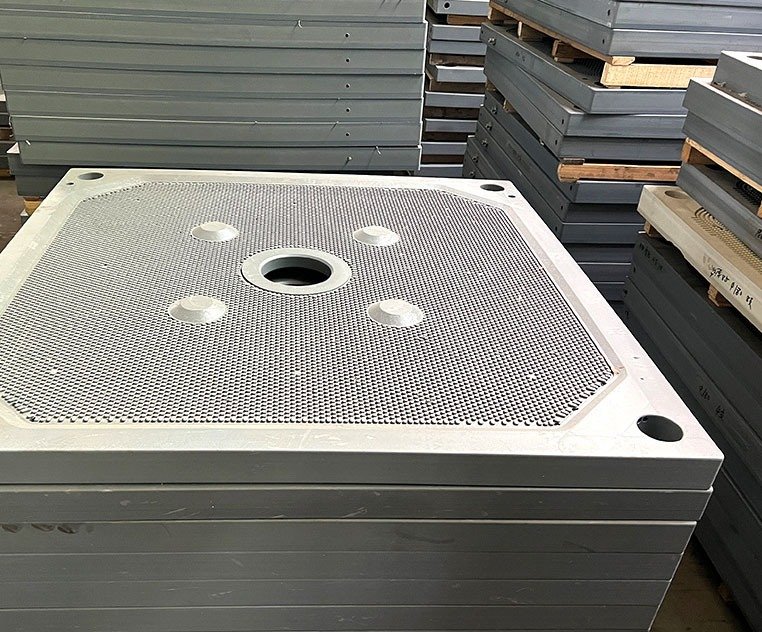
What a small filter press is (320–800 mm plates, 1–20 m²), how to size it on dry solids per day, manual vs automatic, feed pump, and indicative cost for small plants.

In-depth articles on industrial filter presses from Senjie — chamber, plate-and-frame, membrane, and lab models. Selection guides, technical comparisons, and real-world applications across mining, chemical, food, pharmaceutical and wastewater industries.
What a small filter press is (320–800 mm plates, 1–20 m²), how to size it on dry solids per day, manual vs automatic, feed pump, and indicative cost for small plants.
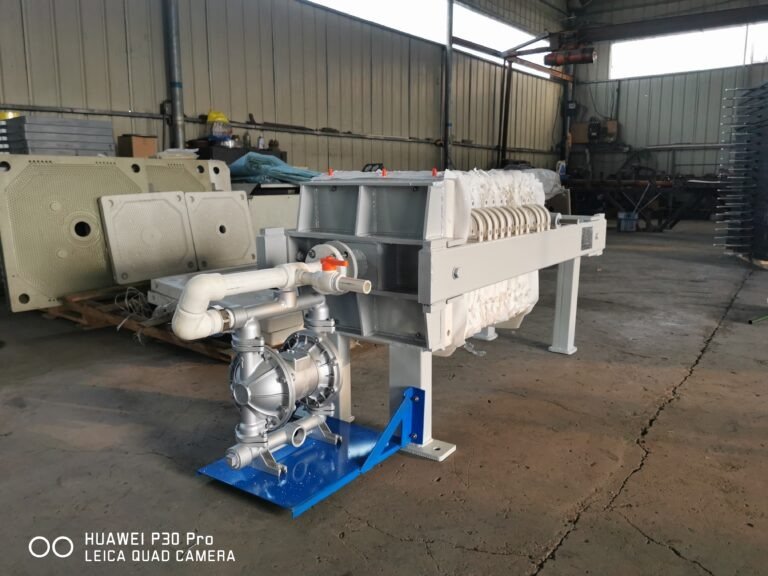
For a 6-month project, renting a filter press typically costs 50 to 70% of the purchase price (8 to 12% of price per month), so renting is cheaper only if the press has no use afterwards. Break-even sits at 8 to 12 months; beyond that, or if the unit can be resold or relocated, buying wins.
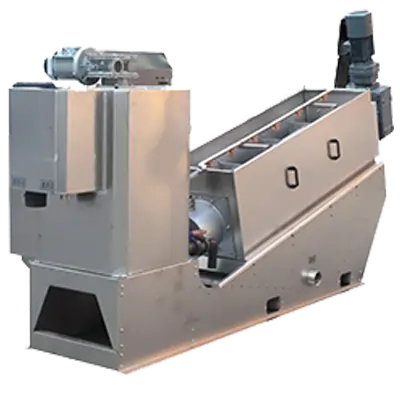
A multi-disc screw press dewaters sludge to 15 to 25% dry solids at 8 to 20 kWh/t DS with minimal labour; a chamber or membrane filter press reaches 30 to 50% DS at 15 to 30 kWh/t DS. Below 1 t DS/day the screw press is cheaper to run; above 3 t DS/day the filter press wins on disposal cost.
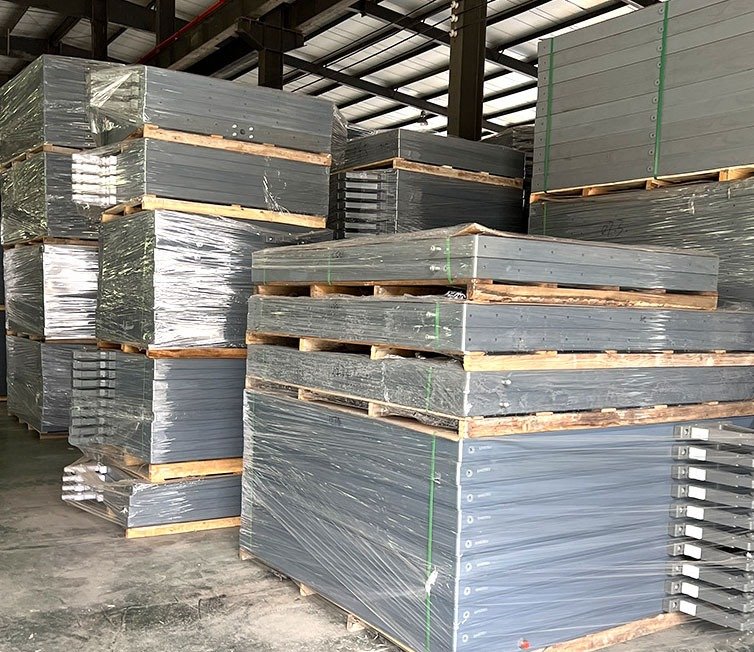
To calculate the number of filter press plates, convert dry solids per day into wet cake volume (cake density 1.2 to 1.6 t/m³), divide by cycles per day, then divide by the chamber volume of one plate (9 L for 630 mm to 55 L for 1500 mm at 30 mm depth) and apply a 1.2 to 1.3 safety factor.
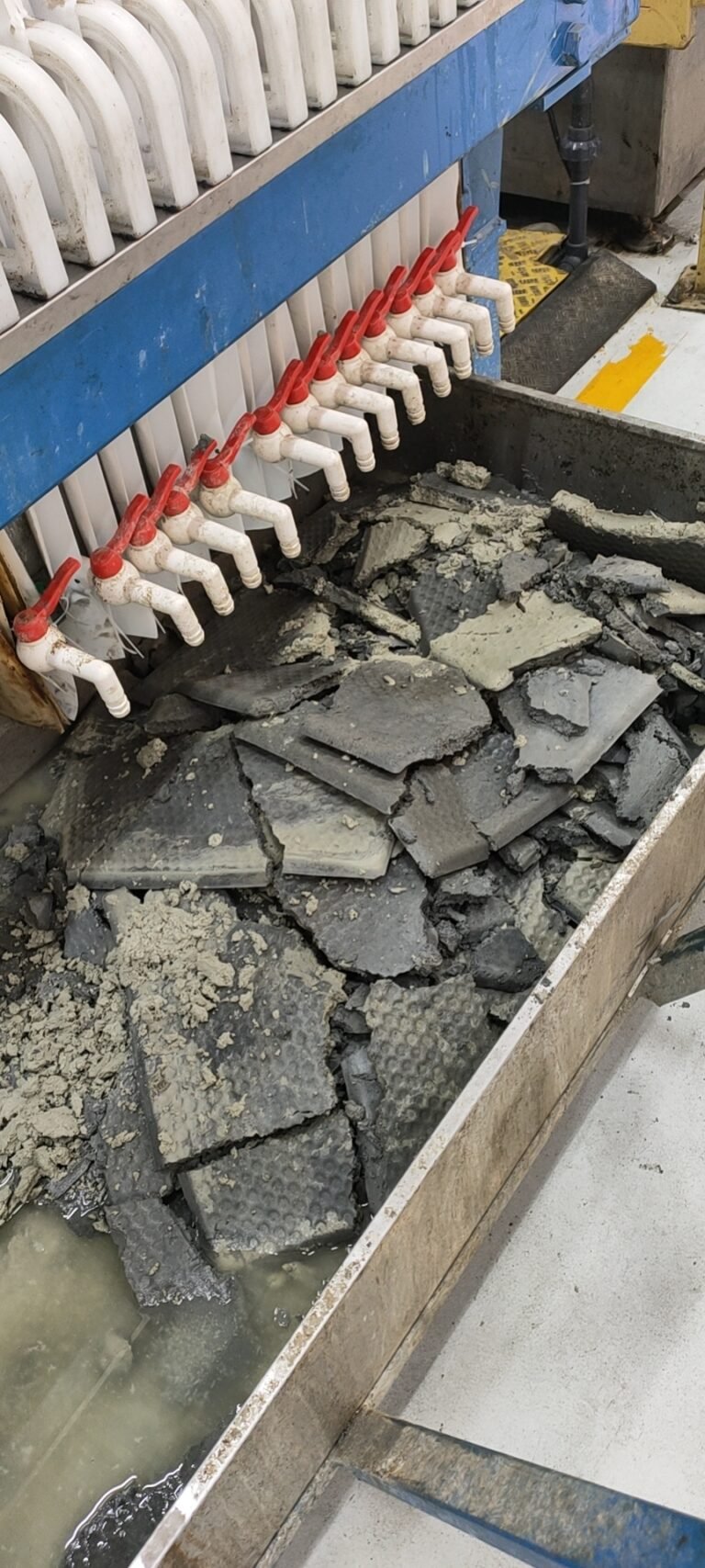
Cake moisture below 30% is achievable on mineral concentrate and many chemical slurries using membrane squeeze at 1.5 to 2.0 MPa, air blow-through at 0.4 to 0.7 MPa, a feed pressure ramp to 1.0 to 1.6 MPa, correct cloth selection and optimised flocculant dosing. Municipal sludge rarely goes below 55 to 60% on any filter press.
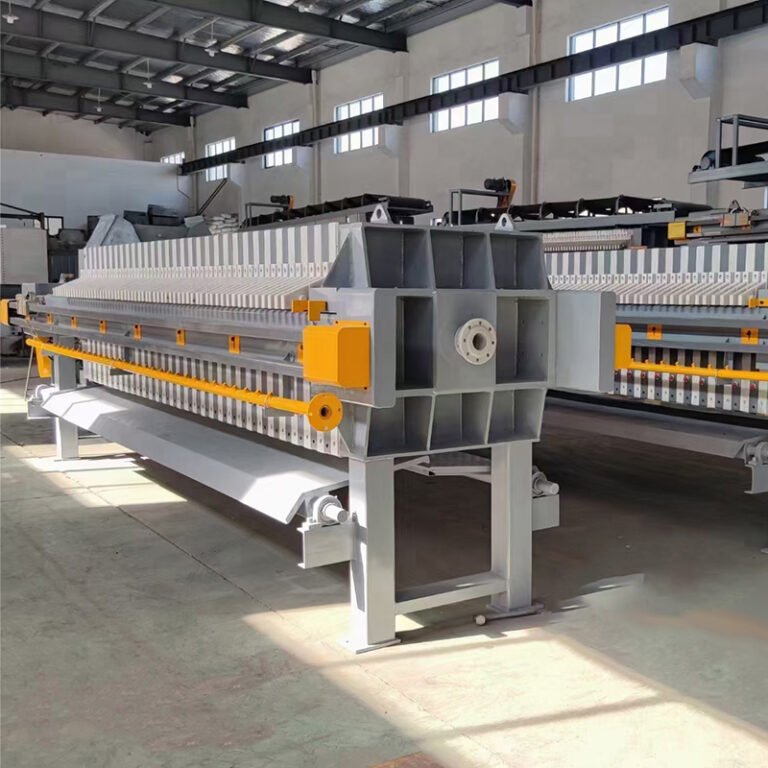
A filter press hydraulic system uses a motor-driven pump, control valves, and a closing cylinder to clamp the plate pack at 20-25 MPa; most faults such as oil leaks, pressure drop, pump noise, and cylinder creep trace back to worn seals, contaminated oil, or trapped air.