
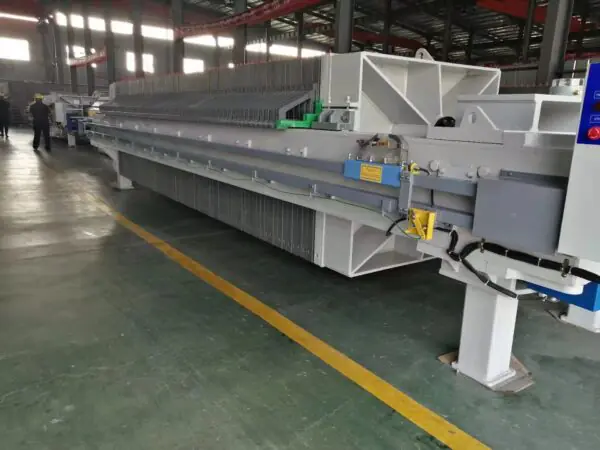
Quick answer: A chamber (recessed-plate) filter press is the standard industrial dewatering machine for mining, chemical and wastewater sludge: slurry is pumped into chambers formed between polypropylene plates, filtrate passes through the cloth and the cake stays in the chamber until the press opens. It is chosen for high feed pressure, long cloth life and easy automation; membrane plates are added only when a drier cake is needed.
Chamber Filter Press – Reliable Choice for Industrial Solid-Liquid Separation
This machine forms sealed chambers between plates and employs high-pressure feeding and mechanical compression to separate solids and liquids with speed and efficiency. It delivers rapid cake formation and outstanding moisture reduction—an advantage that stands out in food-grade processing and high-solids mining applications. Statistical data reveals that lines equipped with such presses now operate with average maintenance cycles exceeding 18 months, greatly easing operational burdens for plant owners.
- Flexible Customization: Multiple plate sizes and materials are available, with batch capacities from 3 to 50 cubic meters, serving both pilot and full-scale lines.
- Durable Construction: The main frame is welded from high-strength steel with multilayer anti-corrosion coating; the plate compression system features hydraulic and automatic safety locks for leak-free, long-term operation under high pressure.
- Process-Friendly Design: Options include automatic plate shifting, cake discharge, and filter cloth washing to match any industry process, minimizing manual labor and downtime.
- Energy-Saving Performance: Advanced hydraulics and optimized piping layouts reduce energy use, lower noise, and minimize waste liquid discharge.
- Multi-Industry Versatility: Adapts seamlessly to mining, chemical, municipal, food, and pharmaceutical separation needs.
- Plate Size: 630/870/1000/1250/1500mm
- Filtration Pressure: 0.6–1.6MPa
- Plate Material: Polypropylene / Stainless Steel
- Batch Capacity: 3–50m³
- Control System: Manual / Hydraulic / Fully Automated PLC
- Highly reliable and flexible, driving production efficiency and green upgrades
- Excellent dewatering delivers lower operating costs and easier downstream processing
- Low-maintenance design enables long-term, stable industrial separation performance
Get a Quote
Buyer FAQ
What cake moisture can a chamber filter press achieve?
A recessed chamber press typically produces cake around 20-35% moisture depending on the slurry; add membrane plates when you need it drier.
What plate sizes are available?
Common plate sizes range from 470mm to 2000mm; the right size depends on your daily solids and target cycle time.
Chamber or membrane press for my application?
Chamber for general dewatering where a 60–75% moisture cake is acceptable and capital cost matters; membrane when a drier cake or shorter cycle pays back in disposal, drying or transport cost. A filtration test on your slurry shows the difference.
What feed pump should I use with a chamber press?
Small presses run well on air-operated diaphragm pumps; larger ones use screw or centrifugal pumps with VFD or pressure control so feed pressure ramps up to the press rating without over-pressure.