
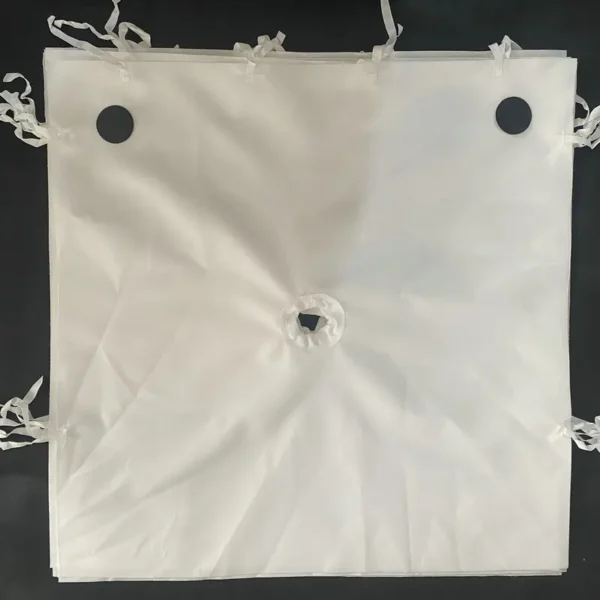
Quick answer: Sludge dewatering filter cloth is a smooth-surfaced polypropylene monofilament or calendered multifilament cloth with medium permeability, chosen so that polymer-conditioned municipal or industrial sludge releases cleanly and the cloth resists blinding. Municipal biosolids favour release and easy washing; industrial sludge may need a finer weave or chemical resistance.
Sludge Dewatering Filter Cloth | Municipal & Industrial Wastewater
Our filter cloths, fabricated from robust polypropylene and high-tenacity polyester, deliver consistent performance under repeated wash cycles and fluctuating pH values. Proprietary surface treatments and controlled pore structures support fast cake discharge and minimize blinding, reducing cleaning time by up to 30% as observed in an Asia-Pacific textile dyeing facility. Key technical data: filtrate turbidity <50mg/L, tensile strength >3500N/5cm, typical service life exceeding 14 months.
- Engineered Cake Release: Specialized finishing enables rapid, near-total cake detachment, lowering operator workload and boosting press uptime.
- High-Efficiency Solid Capture: Uniform micro-pores ensure fine suspended solids are retained, reducing post-filtration clarifier loading.
- Adapted for Aggressive Media: Built to withstand caustic cleaning agents, acid rinses, and mechanical abrasion in industrial sludge streams.
- Customizable Sizing & Reinforcement: Available for all filter press models, belt presses, and vacuum filters, with edge welding and gasket sealing on request.
- Municipal biosolids & sewage sludge thickening
- Electroplating, mining, textile dyeing effluent treatment
- Food & beverage, pharmaceutical process waste dewatering
- Landfill leachate, biological sludge, and digested solids
Contact us to request a trial sample, technical specification sheet, or case study to see how our filter cloth delivers measurable gains in your wastewater operation.
Request a Quote
Related products & guides
Buyer FAQ
Which cloth is best for polymer-conditioned biosolids?
A PP monofilament or calendered multifilament with medium air permeability: it releases sticky cake, washes easily and resists blinding. Tell us the polymer dose and sludge type and we recommend a specific weave.
How long does sludge cloth last?
Typically 6–18 months depending on cycles per day, grit content and washing routine. Regular washing and avoiding over-pressure extend life more than any other factor.
Can you make cloth for my existing press?
Yes. Cloth is sewn to your plate size, feed-hole position and fixing method (barrel neck, drape-over or latex edge). Send the plate drawing or an old cloth as a pattern.