

Quick answer: A used filter press is worth buying only if the frame and hydraulics are sound, plates are uncracked and a current size, and cloth and spares are still available — otherwise the saving on purchase price disappears in refurbishment, downtime and shipping. For importers, a new press from a reputable manufacturer usually wins on total cost once warranty, matching plates, automation and freight are counted.
New vs used filter press is the first decision most importers face when budgeting an equipment purchase, and the cheaper sticker price is not always the lower total cost.
TL;DR: A used filter press typically costs 30-60% less than new but carries higher risk on plate condition, cloth wear, and hydraulic seal life, with limited or no warranty. New presses cost more upfront but come with full warranty, matched spare parts, and predictable performance from day one. Budget-constrained buyers processing non-critical or intermittent volumes can consider used equipment if plates and frame are inspected in person or via detailed video; buyers running continuous production should generally favor new equipment to avoid unplanned downtime risk.
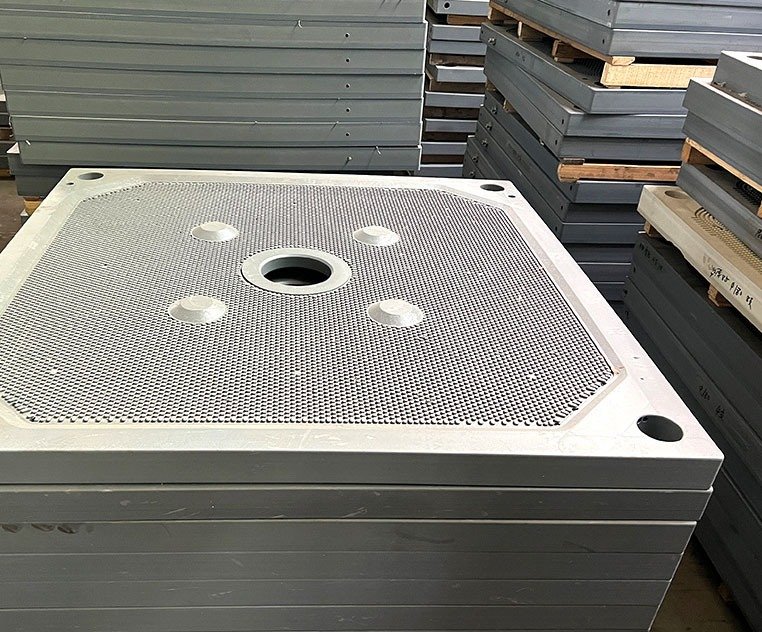
New vs Used Filter Press: The Real Cost Comparison
The honest new vs used filter press comparison depends less on sticker price and more on refurbishment cost, warranty, and downtime risk.
Is a used filter press actually cheaper once you account for refurbishment?
Not always. Used press prices before refurbishment often look attractive at 30-60% below new equipment cost, but plates with worn or cracked filter surfaces, degraded gaskets, and old hydraulic seals commonly need replacement within the first year of use, which can close much of the price gap. Buyers should get a refurbishment quote for cloth, gaskets, and seals before comparing total cost, not just the sale price of the used frame and plates.
What should I inspect before buying a used filter press?
Before finalizing a new vs used filter press decision, key inspection points are: plate surface condition (cracks, warping, or excessive wear on sealing faces), hydraulic cylinder and seal condition (look for leaks or slow closing action), filter cloth condition (usually assume replacement is needed regardless of stated condition), control panel and wiring age and compatibility with your local voltage standard, and confirmation that plate count and size match your actual capacity need rather than being oversized dead weight. Photos are not sufficient for plate sealing-face condition; request video of the press cycling under load if an in-person inspection is not possible.
| Factor | New Filter Press | Used Filter Press |
|---|---|---|
| Upfront cost | 100% (baseline) | Typically 40-70% of new |
| Warranty | Standard manufacturer warranty | Usually none or seller-only, short-term |
| Plate/cloth condition risk | None, all new | Moderate to high, inspection-dependent |
| Spare parts matching | Guaranteed from manufacturer | May require reverse-engineering sizes |
| Lead time | Weeks to months (build to order) | Often faster if unit is in-country already |
When does a used filter press make sense?
Used equipment is a reasonable option for intermittent or seasonal operations, pilot-scale testing before committing to a full new system, or budget-constrained buyers who can tolerate some downtime risk and have in-house maintenance capability to handle plate and seal replacement as needed. It is a weaker fit for continuous production lines, food or pharmaceutical-grade applications with hygiene requirements, or buyers without maintenance staff who would be exposed if the press needs unplanned repair soon after purchase.
What warranty and support should I expect either way?
Regardless of which side of the new vs used filter press decision you land on, new filter presses typically include a manufacturer warranty covering the frame, hydraulic system, and plates for a defined period, often with named spare parts support. Used equipment, even when sold by a dealer rather than a private seller, usually comes with limited or no warranty, so buyers should negotiate at minimum a short trial or inspection period and get any performance claims in writing before final payment. Regardless of new or used, confirm who supplies replacement cloth, diaphragms, and gaskets going forward, since off-brand parts sourced later can be a bigger long-term cost and reliability factor than the initial purchase price.
FAQ
Can a used filter press be re-plated to increase capacity?
Sometimes, if the frame and hydraulic system have spare capacity and plate spacing is compatible, but this should be confirmed by the refurbisher or original manufacturer rather than assumed, since frame length and hydraulic cylinder force both limit how many plates can be added.
Should I buy used if I need food-grade or pharmaceutical-grade filtration?
New equipment is generally the safer choice for hygiene-sensitive applications, since verifying that a used press’s plates, cloth history, and materials meet food or pharma-grade requirements is difficult without full documentation from the original owner.
How long does a refurbished used filter press typically last?
With new cloth, gaskets, and seals installed at purchase and proper maintenance afterward, a well-inspected used frame and plate set can often run for years, similar to new equipment, but this depends heavily on the condition of the plates themselves, which cannot be fully restored if cracked or badly worn.
Related equipment: filter press, plate and frame filter press. See also: filter press cost guide and buying a filter press from China: certifications, warranty, delivery.
For general background on filter press equipment and how it is constructed, see filter press (Wikipedia).
By Senjie Engineering Team. Last updated: July 29, 2026.