챔버 필터 프레스
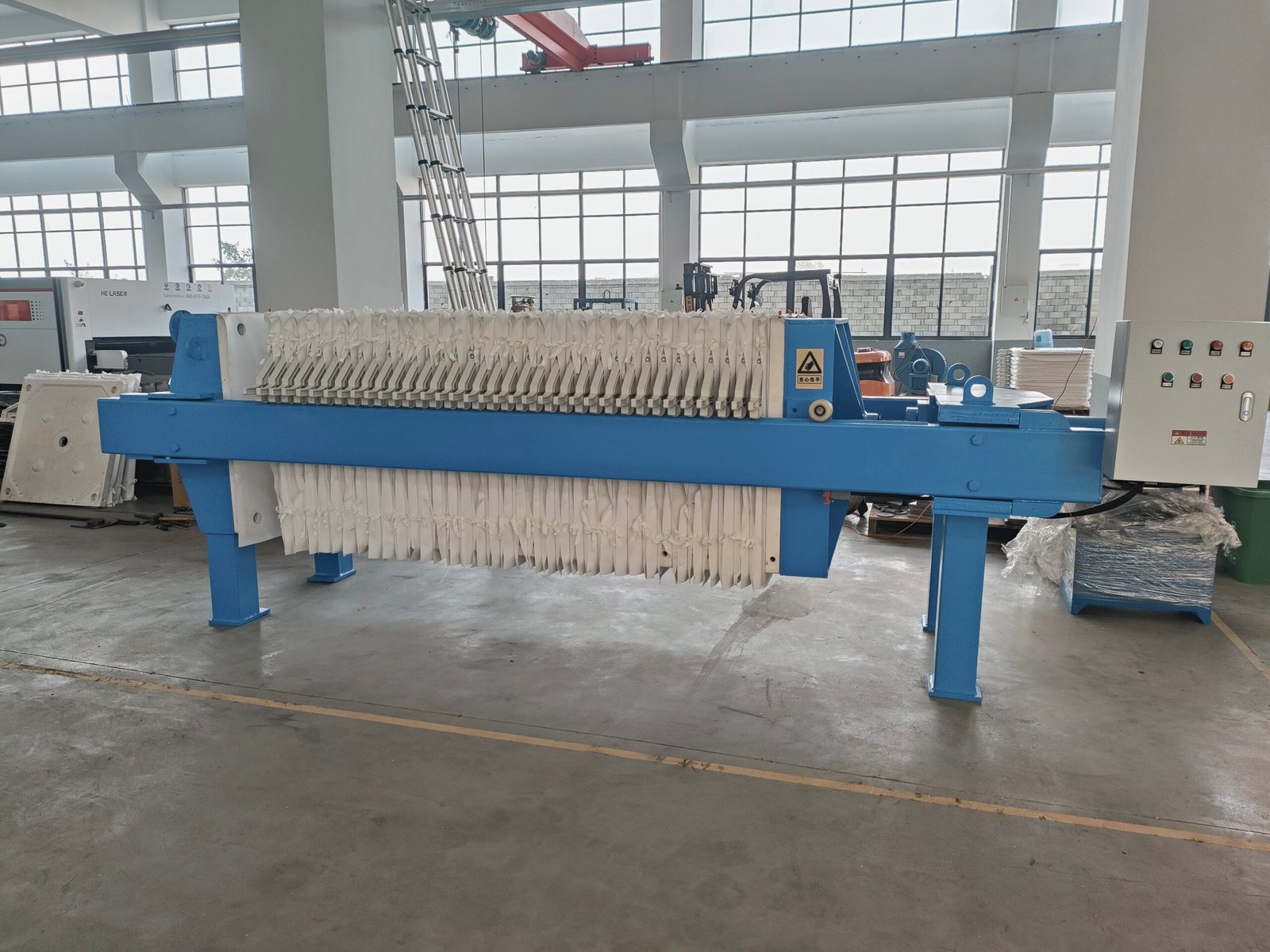
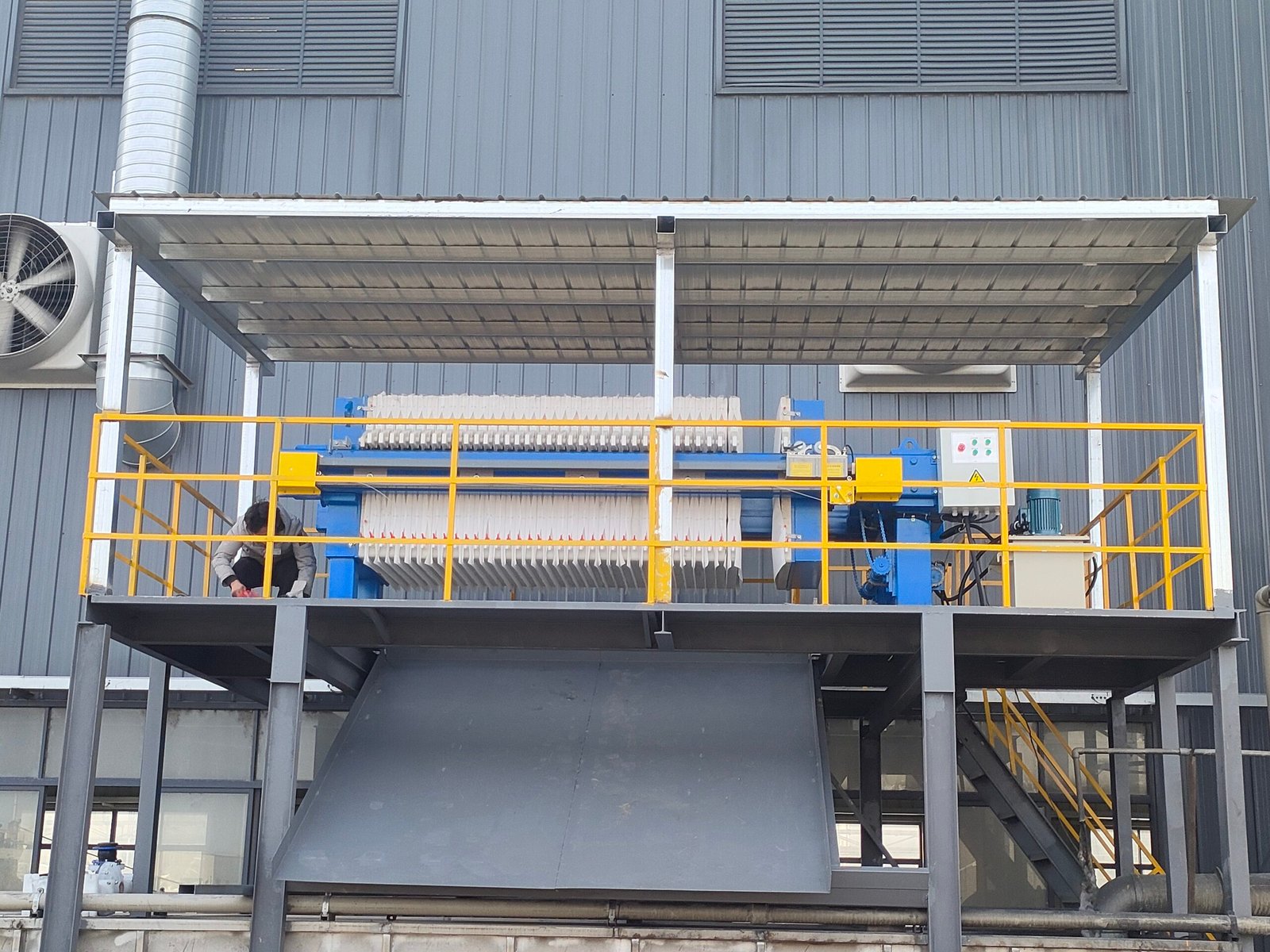
간단히 말하면: 챔버 필터 프레스(리세스 플레이트 필터 프레스)는 고액 분리의 주력 장비입니다. 슬러리는 0.6–1.0 MPa로 강화 PP 플레이트로 형성된 챔버로 펌핑되고, 여액은 여포를 통과하며 25–45 % 수분 케이크가 남습니다. Senjie는 광산 테일링, 석탄 슬러리, 화학, 세라믹 및 도시 슬러지용으로 2–800 m² 여과 면적의 630–2000 mm 챔버 프레스를 수동, 반자동 및 PLC 자동 버전으로 제작합니다.
Recessed-chamber filter presses with 630–2000 mm polypropylene plates, 0.6–1.6 MPa feed pressure and manual, semi-automatic or fully automatic hydraulic closing — for mining tailings, chemical, municipal and industrial sludge.
사양 보기빠른 답변: A chamber (recessed-plate) filter press dewaters slurry by pumping it into chambers formed between recessed polypropylene plates; solids build up as cake on the filter cloth and clear filtrate drains out, then the press opens and the cake drops. Choose the plate size and number of chambers from your daily dry solids and cycle time, and the closing type — manual, semi-hydraulic or fully automatic hydraulic — from how many cycles a day you run.
주요 수치 한눈에 보기
- Plate sizes: 630, 800, 1000, 1250, 1500 and 2000 mm
- Feed pressure: 0.6–1.6 MPa, depending on pump and plate rating
- Chamber depth: typically 25–40 mm per chamber (cake thickness)
- Cake moisture: 60–75% on sludge, 15–30% on mineral slurries (slurry-dependent)
- Cycle time: 1–4 h on sludge, 20–60 min on fast-filtering mineral slurries
How a chamber filter press works
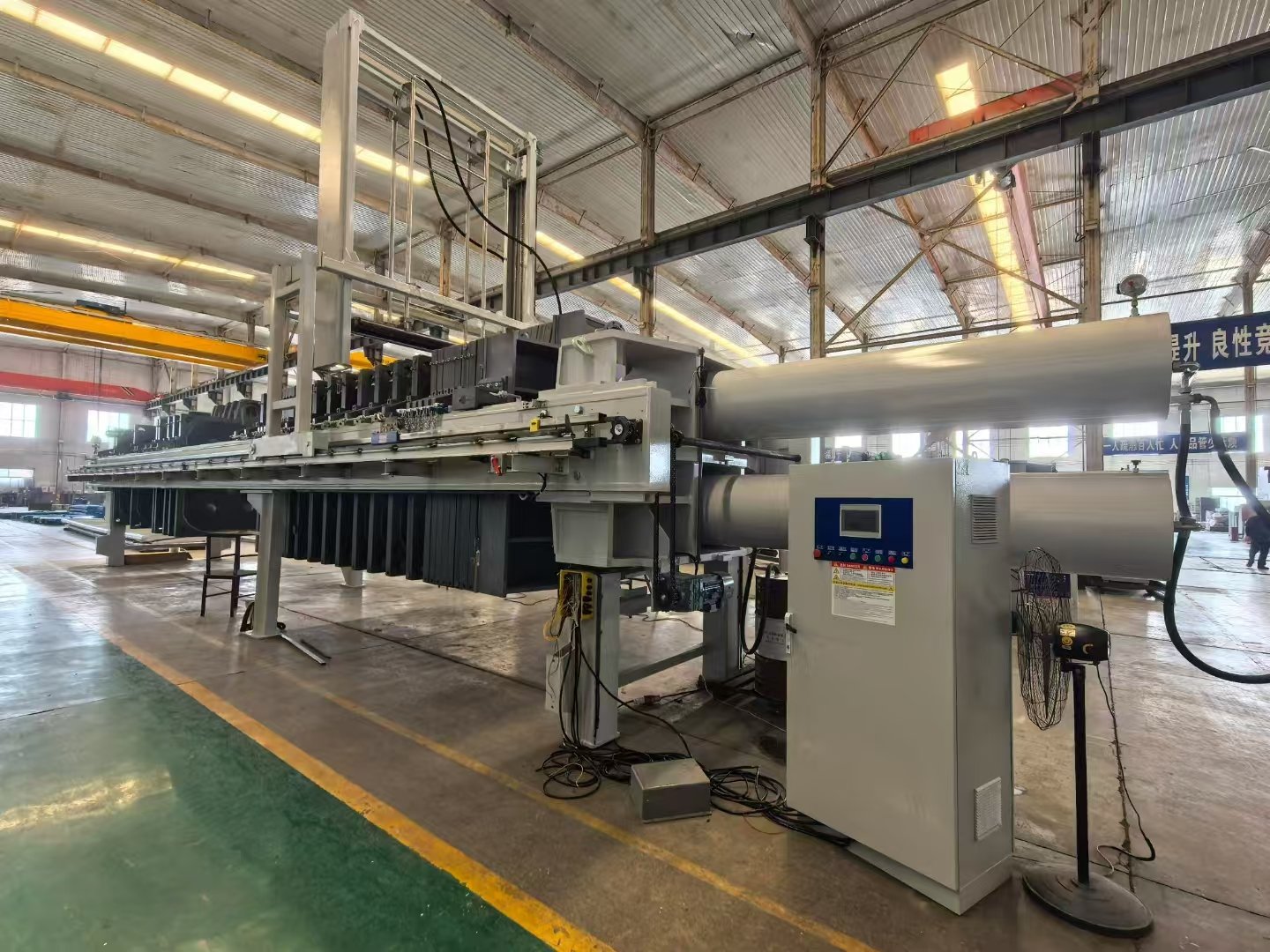
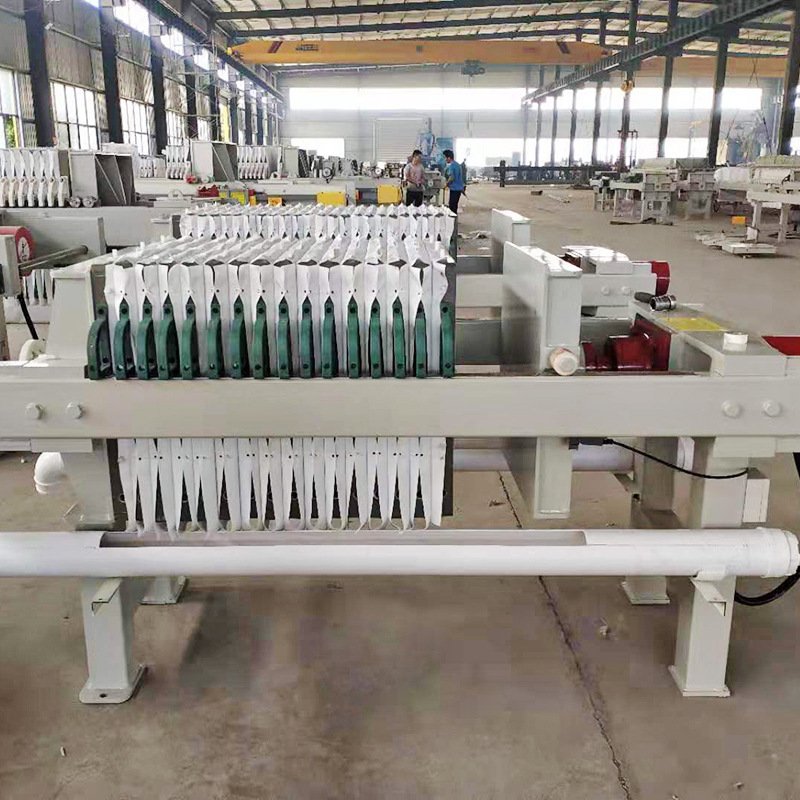
A hydraulic cylinder presses the plate pack together so that the recessed faces of neighbouring plates form sealed chambers, each lined with filter cloth. A feed pump fills the chambers through the centre feed hole; as pressure rises to 0.6–1.6 MPa, solids are retained on the cloth and filtrate passes through the plate drainage surface to the outlet ports. When filtrate flow falls off the chambers are full of cake, the feed stops, the press opens and the cakes are discharged plate by plate.
Manual, semi-hydraulic or fully automatic?
| Closing type | How it closes and opens | 일반적인 사용 |
|---|---|---|
| Manual | Hand-operated hydraulic pump or screw closes the pack; plates shifted by hand | Small presses, one or two cycles a day, lowest cost |
| Semi-hydraulic (semi-automatic) | Electric hydraulic power pack closes and holds pressure automatically; plates shifted by hand | The usual default for small and medium plants |
| Fully automatic hydraulic | PLC-controlled closing, pressure hold, automatic plate shifter; optional cake discharge aids and cloth washing | Many cycles a day, large presses, limited operator time |
Typical configurations by plate size
| 플레이트 크기 | Filter area per chamber (approx.) | Typical number of chambers | Cake volume per chamber at 30 mm |
|---|---|---|---|
| 630 mm | 0.6 m² | 10–40 | about 0.01 m³ |
| 800 mm | 1.0 m² | 15–60 | about 0.015 m³ |
| 1000 mm | 1.6 m² | 20–80 | about 0.025 m³ |
| 1250 mm | 2.5 m² | 30–100 | about 0.04 m³ |
| 1500 mm | 3.7 m² | 40–120 | about 0.055 m³ |
| 2000 mm | 6.5 m² | 60–150 | about 0.1 m³ |
These are typical engineering ranges, not fixed models: the press is configured to your slurry. To turn them into a size, work from dry solids per day — the method and a worked example are in 필터 프레스 용량 계산 방법 그리고 필터 플레이트가 몇 개 필요하세요.
Chamber, membrane or plate-and-frame?
Choose a chamber press for general dewatering where a standard cake is acceptable and capital cost matters. Move to a 멤브레인 필터 프레스 when a drier cake or shorter cycle pays back in disposal or transport cost, and to a 판형 압착기 for small batches, thin cakes or when the cake must come out intact. The plate differences are compared in recessed chamber plate vs membrane plate.
Where chamber filter presses are used
Mining tailings and concentrate
Stackable tailings cake and recovered process water; see 테일링 및 정광 탈수.
도시 및 산업 슬러지
Conditioned biological and chemical sludge dewatered for landfill or drying; see wastewater sludge dewatering.
Stone, sand and ceramic slurry
Fast-filtering mineral slurries with clear water returned to the process; see stone and building materials.
Chemical, food and pharmaceutical
PP or stainless construction and food-contact cloth where hygiene and chemical resistance matter.
견적을 위해 무엇을 보내야 하나요
Slurry type and solids content, daily volume or tonnes of dry solids, target cake moisture, temperature and pH, and site voltage. A slurry sample lets us run a filtration test and size the press on real cycle time and moisture.
자주 묻는 질문
What is the difference between a manual, semi-hydraulic and hydraulic chamber filter press?
All three use the same chamber plates; they differ in how the plate pack is closed and opened. A manual press closes with a hand-operated hydraulic pump or screw; a semi-hydraulic (semi-automatic) press closes and holds pressure with an electric hydraulic power pack but plates are shifted by hand; a fully automatic hydraulic press adds automatic pressure hold, plate shifting and often cloth washing under PLC control.
What cake moisture does a chamber filter press achieve?
On municipal and industrial sludge a chamber press typically produces 60–75% moisture; on mineral slurries such as tailings, sand and stone slurry 15–30% is common. The real figure depends on particle size, conditioning and final feed pressure, and is confirmed by a filtration test on your sample.
How long is a chamber filter press cycle?
Typically 1–4 hours from feed start to cake discharge for sludge, and 20–60 minutes for fast-filtering mineral slurries. Cycle time sets how many cycles you get per day and therefore the press size you need.
When should I choose a membrane press instead?
When a drier cake or shorter cycle pays back in disposal, drying or transport cost. A membrane press squeezes the cake after filtration and usually removes a further 5–15 percentage points of moisture, at a higher plate cost.
우리 공장의 챔버 필터 프레스 사진