
Metallurgy & Steel Industry
Quick answer: In steel and non-ferrous metallurgy a filter press dewaters the fine, often abrasive slurries that the process cannot discharge: blast-furnace and converter gas-cleaning sludge, rolling-mill oily scale sludge, pickling and neutralisation sludge, and hydrometallurgical leach residues and precipitates. A chamber filter press with 1000–2000 mm polypropylene plates handles most of these; a membrane press is chosen where the cake is recycled to the sinter plant or sold and must be as dry as possible. Iron-rich sludge and scale often need only a short cycle because the particles are dense and filter fast.
Key figures at a glance
- Slurries: gas-cleaning sludge, scale and oily sludge, pickling and lime-neutralisation sludge, zinc, copper and nickel leach residues
- Presses: chamber or membrane, 1000–2000 mm plates, automatic plate shifting for round-the-clock duty
- Feed pressure 0.6–1.0 MPa; membrane squeeze 0.8–1.6 MPa where a drier cake pays back
- Cloth: abrasion-resistant polypropylene monofilament or multifilament; oily sludge may need a tighter weave and more frequent washing
- Feed pumps: slurry pumps or diaphragm pumps for abrasive solids; see choosing a filter press feed pump
Related: heavy-metal wastewater precipitation and dewatering · electroplating and metal finishing · filter press cloth · filtration test on your sludge sample
In metallurgy and steel production, substantial volumes of wastewater, sludge, and slurry are generated. These industries are known for high pollution and energy consumption, necessitating robust solid-liquid separation equipment. Filter presses have proven highly effective in applications like sludge dewatering, resource recovery, and wastewater treatment in the steel industry.
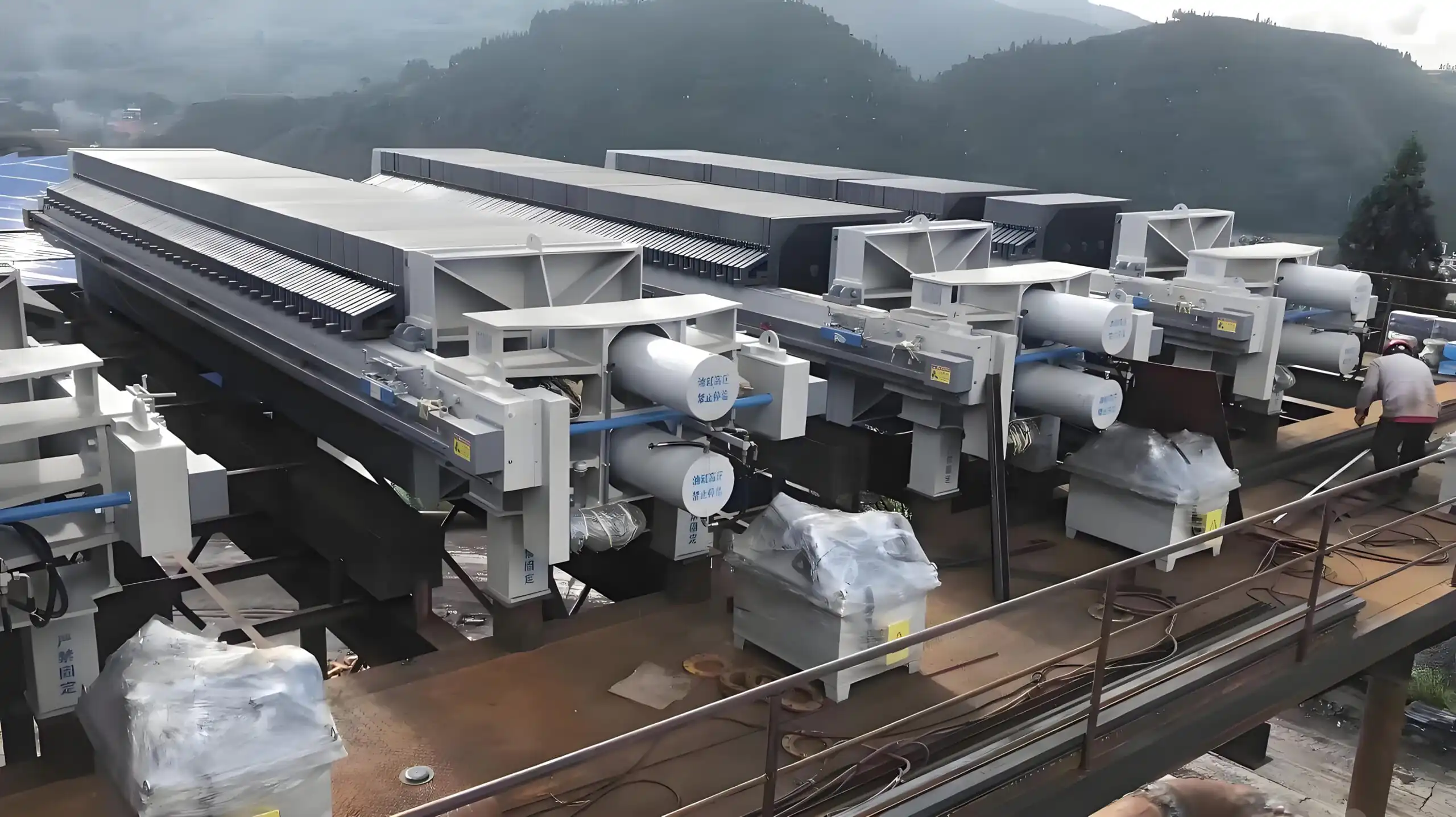
Filter presses in metallurgy frequently handle steel pickling sludge, ore slurry dehydration, blast furnace slag water treatment, and flue gas desulfurization by-products. Acidic metal ions from pickling processes require corrosion-resistant chamber filter presses to minimize sludge moisture. Iron ore concentrate processing and pellet sintering use filter presses to decrease energy consumption. Blast furnace slag water, rich in particulate matter, can be efficiently recycled. Sulfur-containing by-products from flue gas treatment are compacted into transport-friendly cakes using plate-and-frame filter presses.
Our filter presses offer high dewatering efficiency and significantly reduce disposal costs. They are fully customizable, employing high-temperature polypropylene filter plates, stainless steel pipes, and rubber sealing materials suitable for acidic wastewater treatment. With one-touch startup, automatic plate shifting, sludge discharge, filter cloth shaking, and washing systems, these machines ensure continuous, 24-hour operation.
Optional accessories include screw pumps, pneumatic diaphragm pumps, and plunger pumps, as well as automated filter cloth washing systems, enclosed collection tanks, cake conveyor belts, and remote control modules.
Our fully automatic membrane filter press has been reliably operating for three years at a pickling plant in Hanoi, Vietnam, achieving around 35% cost reduction in outsourced sludge treatment.
We provide tailored solid-liquid separation solutions for the metallurgy industry, with global delivery, one-year warranty, and long-term spare parts supply. Contact us for customized recommendations and quotations.