

By Senjie Filter Press Engineering Team · Last updated: 2026-09-10
Quick answer: Filter press cloth price typically runs US$4-8 per square meter for polypropylene (PP), US$6-12 per square meter for polyamide (PA/nylon), and US$7-14 per square meter for polyester (PET), depending on micron rating, fabric weight, and weave type, with finished cutting and hemming to plate size adding to the raw fabric price. These are indicative FOB China figures — request a quotation for your exact plate size and grade.
Key figures at a glance
- Indicative cloth price: about US$4–14 per m² depending on fibre, weave and weight
- PP monofilament is the base price; PA, PET and especially PTFE cost more
- Sewn cloths are quoted per piece; per-m² prices are roll or bulk basis
- Final quotation depends on plate size, quantity and fixing method
- Cloth cost is usually under 5% of press lifetime cost
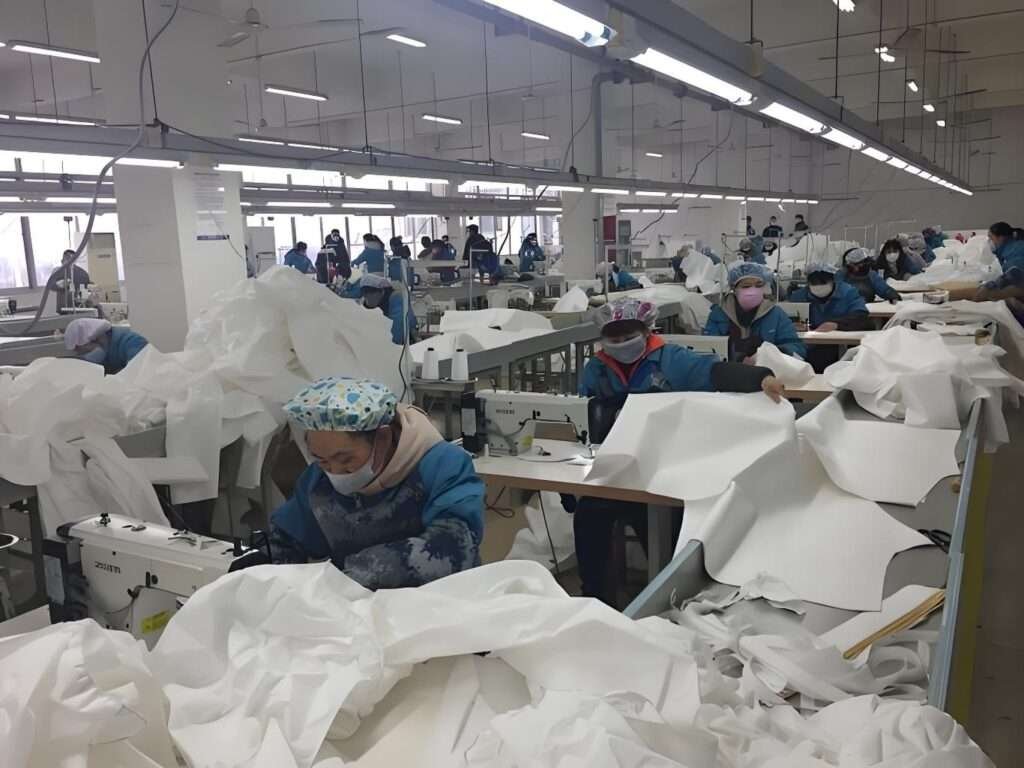
Filter press cloth price is usually quoted per square meter of finished, plate-ready fabric, but the total cost of a cloth order depends just as much on plate size, order volume, and finishing requirements as on the base material price. This guide breaks down typical cloth price by material and plate size, and the practical ways to reduce total cloth spend without sacrificing performance.
What is typical filter press cloth price by material?
Filter press cloth price varies mainly by fiber type, with polypropylene (PP) the most economical option, polyamide (PA/nylon) priced higher for its abrasion resistance, and polyester (PET) similarly priced to PA depending on weave and micron rating. Heavier fabric (higher grams per square meter) and finer micron ratings both push price toward the top of each material’s range.
| Material | Typical price per m² (indicative FOB China) | Typical weight range |
|---|---|---|
| Polypropylene (PP), monofilament | US$4-8 | 300-600 g/m² |
| Polyamide (PA/nylon), monofilament | US$6-12 | 350-700 g/m² |
| Polyester (PET), monofilament | US$7-14 | 350-900 g/m² |
| Multifilament (PP/PA/PET blends) | US$6-13 | Varies by weave |
These figures are indicative — request a quotation with your exact plate size, micron rating, and order quantity for a firm price. Prices are per square meter for standard monofilament woven cloth in roll or bulk quantities; finished cloths sewn to a specific plate size are quoted per piece, so a per-plate price is not a simple multiple of the per-square-meter figure. Final quotation depends on plate size, micron rating, weave, finishing, quantity and shipping terms.
How does plate size affect total cloth order cost?
Plate size affects total cloth order cost directly because larger plates need proportionally more cloth area per piece, and a full press needs one piece of cloth per plate face, so total square meters scale with both plate size and plate count. A press with 60 chambers at 1000 mm plate size needs roughly 3-4 times the total cloth area of the same chamber count at 630 mm plate size.
| Small plates (320-470 mm): | lowest cloth area per plate, suited to lab and pilot testing volumes. |
|---|---|
| Mid plates (630-1000 mm): | the most common industrial range, where total order size starts to benefit from volume pricing. |
| Large plates (1250-2000 mm): | highest cloth area per plate; even modest plate counts require substantial total square meterage, making per-square-meter price negotiation more impactful on total cost. |
Buyers can check standard plate dimensions on the filter plate page to estimate total cloth area needed before requesting a cloth quotation.
What finishing costs are added to raw fabric price?
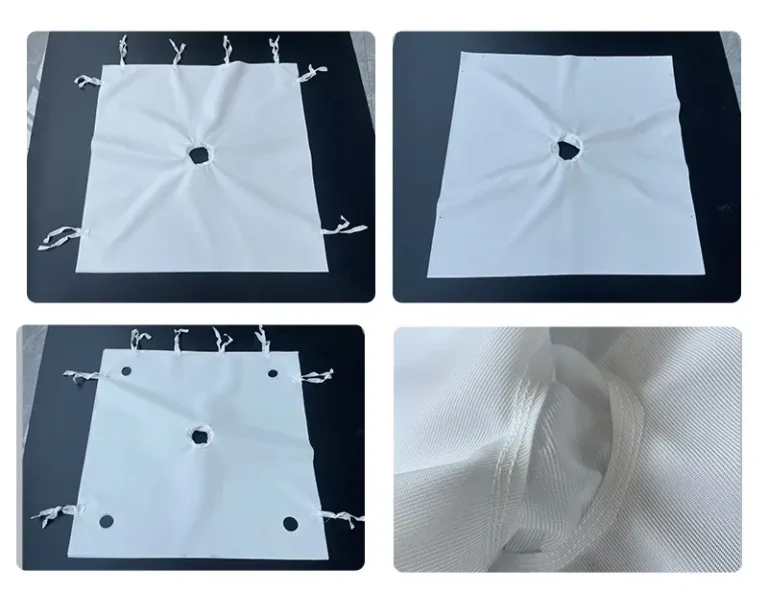
Raw fabric price by the square meter does not include cutting to exact plate dimensions, hemming the edges to prevent fraying, and fitting eyelets or grommets for mounting on the plate, all of which add labor cost on top of the base material price. A properly finished, plate-ready cloth costs more than raw yardage of the same fabric, but installs correctly and lasts longer than field-cut cloth with unfinished edges.
| Cutting to size: | precision cutting to the plate’s exact outline, avoiding waste from oversized generic sheets. |
|---|---|
| Hemming: | finished edges resist fraying and tearing at the plate perimeter during repeated closing cycles. |
| Eyelets/grommets: | allow secure mounting so cloth does not shift or wrinkle during plate closing, which can otherwise cause localized wear or leakage. |
How can a plant reduce total filter press cloth cost?
Total filter press cloth cost can be reduced by ordering full plate sets cut and finished to exact size rather than oversized raw fabric requiring on-site cutting and generating waste, by consolidating orders into fewer, larger purchases to access volume pricing, and by selecting the most economical material and micron rating that still meets the required filtrate clarity for the application. Over-specifying a finer micron rating or heavier fabric than the slurry requires raises cost without a corresponding performance benefit.
| Order finished, plate-ready cloth: | avoids on-site cutting waste and labor, and reduces installation errors. |
|---|---|
| Consolidate orders: | ordering a year’s worth of replacement cloth at once typically costs less per square meter than repeated small orders. |
| Match micron rating to the slurry, not the finest available option: | unnecessary fineness raises cost and can shorten cloth life through faster blinding. |
| Track cloth life by application: | knowing that abrasive slurries need replacement every 3-5 months versus 8-12 months for gentler duty helps plan order timing and volume. |
Why buy filter press cloth from Senjie?
Senjie is a China-based manufacturer supplying PP, PA/nylon, and PET filter press cloth in monofilament and multifilament weaves, cut and finished to match its own chamber, membrane, and plate-and-frame presses as well as third-party press brands, exporting to 40+ countries since 2014. Cloth is quoted per square meter with finishing (cutting, hemming, eyelets) specified clearly rather than bundled ambiguously into a single figure.
Review the filter press cloth range and matching filter plate sizes — indicative FOB China price per square meter is available on request for your plate size and grade.
Frequently Asked Questions
What is a typical filter press cloth price per square meter?
Indicative FOB China prices for filter press cloth typically run US$4-8 per square meter for standard woven polypropylene (PP), US$6-12 per square meter for polyamide (PA/nylon), and US$7-14 per square meter for polyester (PET) monofilament cloth, depending on micron rating, weight, and order volume. These are indicative figures — request a quotation for your specific plate size and grade.
Does plate size affect the total cost of a filter cloth order?
Yes, directly, since larger plates need more cloth area per plate and more plates per press, so total order cost scales with total square meters needed rather than price per plate. A 2000 mm plate press needs several times more cloth area per plate than an 800 mm press of similar chamber count.
How can a buyer reduce total filter press cloth cost?
Buyers can reduce total cloth cost by ordering cloth cut and hemmed to the exact plate size rather than oversized sheets requiring on-site cutting and waste, by ordering full sets in volume rather than single plates repeatedly, and by choosing the lowest-cost material and micron rating that still meets filtrate clarity requirements.
Is multifilament cloth more expensive than monofilament cloth?
It depends on the specific fabric, but multifilament cloth is often priced similarly to or slightly above monofilament cloth of the same material and micron rating, with the bigger cost driver typically being weight per square meter and fineness of weave rather than filament type alone.
Should filter press cloth price include cutting, hemming, and eyelets?
Yes, a proper filter press cloth quotation should specify whether the price is for raw fabric by the square meter or for finished cloth cut, hemmed, and fitted with eyelets or grommets to the buyer’s exact plate size, since finishing work adds meaningfully to the raw fabric price.
Ready to spec the right filter press for your application? Contact Senjie’s engineering team for a free sizing recommendation and an indicative quotation.