
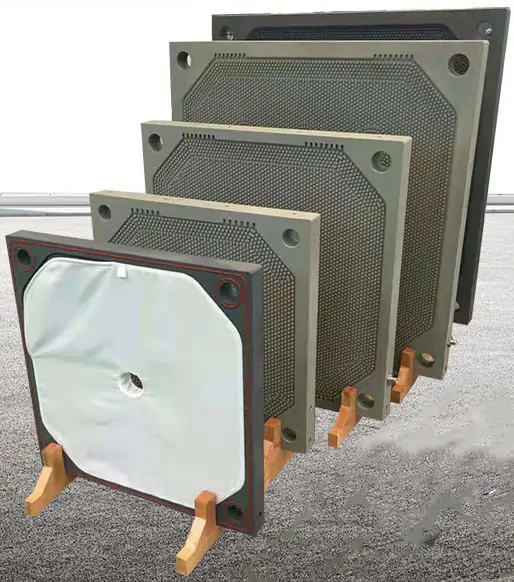
Szybka odpowiedź: Polypropylene (PP) filter press plates are the standard plate for chemical, mining and wastewater duty: light, corrosion-resistant across most acids and alkalis, rated to about 90 °C and available as recessed-chamber or membrane plates in sizes from 630 to 2000 mm. Send your existing plate size, thickness and feed-hole layout and we can match or replace plates from other manufacturers.
Płyty filtracyjne z polipropylenu – wysokowydajne przemysłowe rozwiązania filtracyjne
- Materiał: 100% czysty polipropylen (PP), odporny na korozję i nietoksyczny
- Dostępne rozmiary: Od 400 mm do 2000 mm (możliwość dostosowania na życzenie)
- Zakres ciśnienia: Do 1,6 MPa (standard), dostępne opcje wysokociśnieniowe
- Struktury płytowe: Komora, membrana (przepona) i płytowo-ramowa
- Odporność na temperaturę: Do 90°C ze standardowym PP; dostępne opcje dla wyższych temperatur
- Obróbka powierzchniowa: Wykończenie polerowane w celu ograniczenia przywierania osadu i ułatwienia rozładunku
- Przemysł chemiczny: Filtracja kwasów, zasad, rozpuszczalników i chemikaliów drobnych
- Górnictwo i metalurgia: Odwadnianie zawiesiny i przetwarzanie odpadów poflotacyjnych
- Oczyszczanie ścieków: Odwadnianie osadów komunalnych i przemysłowych
- Żywność i napoje: Klarowanie soku i filtracja oleju jadalnego
- Farmaceutyki: Substancja czynna i separacja produktów biotechnologicznych
- Oferujemy rozwiązania OEM obejmujące branding, dostosowanie formy oraz optymalizację projektu w oparciu o Twoje potrzeby dotyczące sprzętu i procesu.
- Opcje obejmują odporność na wysokie temperatury, zaawansowane konstrukcje do usuwania osadu oraz niestandardowe konfiguracje uszczelek.
- ✔ Bezpośrednie dostawy z fabryki z rygorystyczną kontrolą jakości
- ✔ Ponad 15 lat doświadczenia w produkcji
- ✔ Certyfikaty ISO i CE zgodne z międzynarodowymi standardami
- ✔ Eksportowane do ponad 40 krajów na całym świecie
- ✔ Wsparcie inżynieryjne i szybka dostawa
How to specify a PP filter press plate
A plate order needs five things: plate size (630, 800, 1000, 1250, 1500 or 2000 mm square), plate type (recessed chamber, membrane, or head/tail plate), chamber depth (usually 25–40 mm total, i.e. 12–20 mm recess per face), feed and filtrate port layout (centre feed with corner filtrate ports is the common pattern), and the handle and locating design of the press it will run in. If the plates are replacing another maker’s set, a drawing or clear photos of one old plate with a tape measure answer all five.
Recessed chamber vs membrane PP plates
| Typ płytowy | Jak to działa | Cake moisture (typical sludge) | Ciśnienie | When to choose |
|---|---|---|---|---|
| Płyta komory wpuszczanej | Cake forms in the recess under feed pressure only | 60–75% | 0.6–1.6 MPa feed | General duty, lowest cost, longest cloth life |
| Płyta membranowa (przeponowa) | Flexible PP membrane squeezes the cake after filtration | 45–60% | 0.8–1.6 MPa squeeze (2.0–3.0 MPa reinforced) | Drier cake or shorter cycle; cake washing |
| Mixed pack (alternating) | One membrane plate between two chamber plates | 50–65% | As membrane | Lower plate cost than a full membrane pack |
Why plates fail and how to avoid it
PP plates rarely wear out; they crack or deform. The usual causes are uneven feeding (a partly filled chamber loads one face), over-pressure beyond the plate rating, running hot slurry above about 90 °C on standard PP, closing the press on a foreign object, and leaving plates hanging unsupported when the press is open. Keeping feed pressure ramps gradual, cleaning cloth necks so chambers fill evenly, and specifying reinforced PP for high squeeze pressure prevent most breakage. See why filter press plates crack or leak for the full checklist and the plate selection guide for choosing between PP, reinforced PP and other materials.
Replacement plates for other manufacturers’ presses
Because plate sizes and feed layouts are largely standardised, PP plates can usually be matched to presses from other makers. The critical dimensions are plate size, thickness, chamber depth, feed-hole diameter and position, filtrate port positions and the handle spacing. Small differences in thickness can be absorbed within a pack; differences in port layout cannot, so those are checked first. New plates are supplied with matching tkanina filtracyjna patterns if required.
Poproś o wycenę
Powiązane produkty i przewodniki
- Płyty prasy filtracyjnej
- Płyta filtracyjna PP o wysokiej wytrzymałości
- Przewodnik wyboru płyt filtracyjnych
FAQ Kupującego
Can PP plates replace the plates in my existing filter press?
Usually yes. PP plates are made to standard sizes (630, 800, 1000, 1250, 1500, 2000 mm) and can be matched to another manufacturer’s feed-hole position, thickness and handle design. Send a drawing or photos of your current plate and we will confirm compatibility.
What temperature and pressure can PP filter plates handle?
Standard PP plates are rated for continuous service up to about 90 °C and feed pressures of 0.6–1.6 MPa; reinforced PP and membrane plates are specified for higher squeeze pressures. Tell us your slurry temperature and required feed pressure so the right grade is selected.
How do I know whether I need recessed plates or membrane plates?
Choose recessed (chamber) plates for general dewatering where a cake of 60–75% moisture is acceptable; choose membrane plates when you need a drier cake or a shorter cycle. A filtration test on your slurry shows the difference before you buy.
What information do you need for a quotation?
Plate size, number of plates, plate type (recessed or membrane), slurry type and temperature, and — if replacing plates — the make or a drawing of your existing press. Photos of the current plate are enough to start.