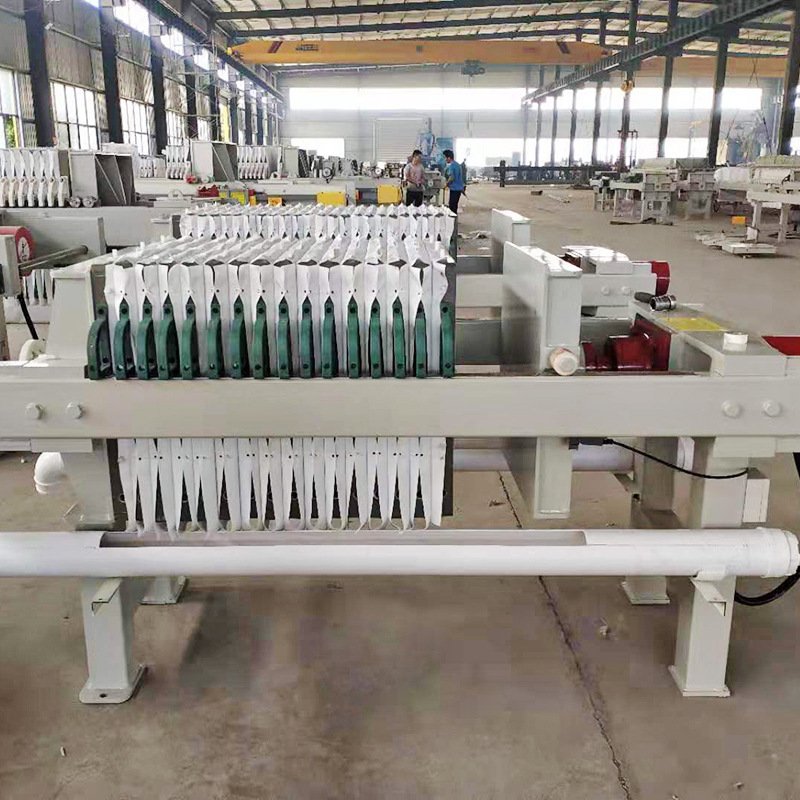
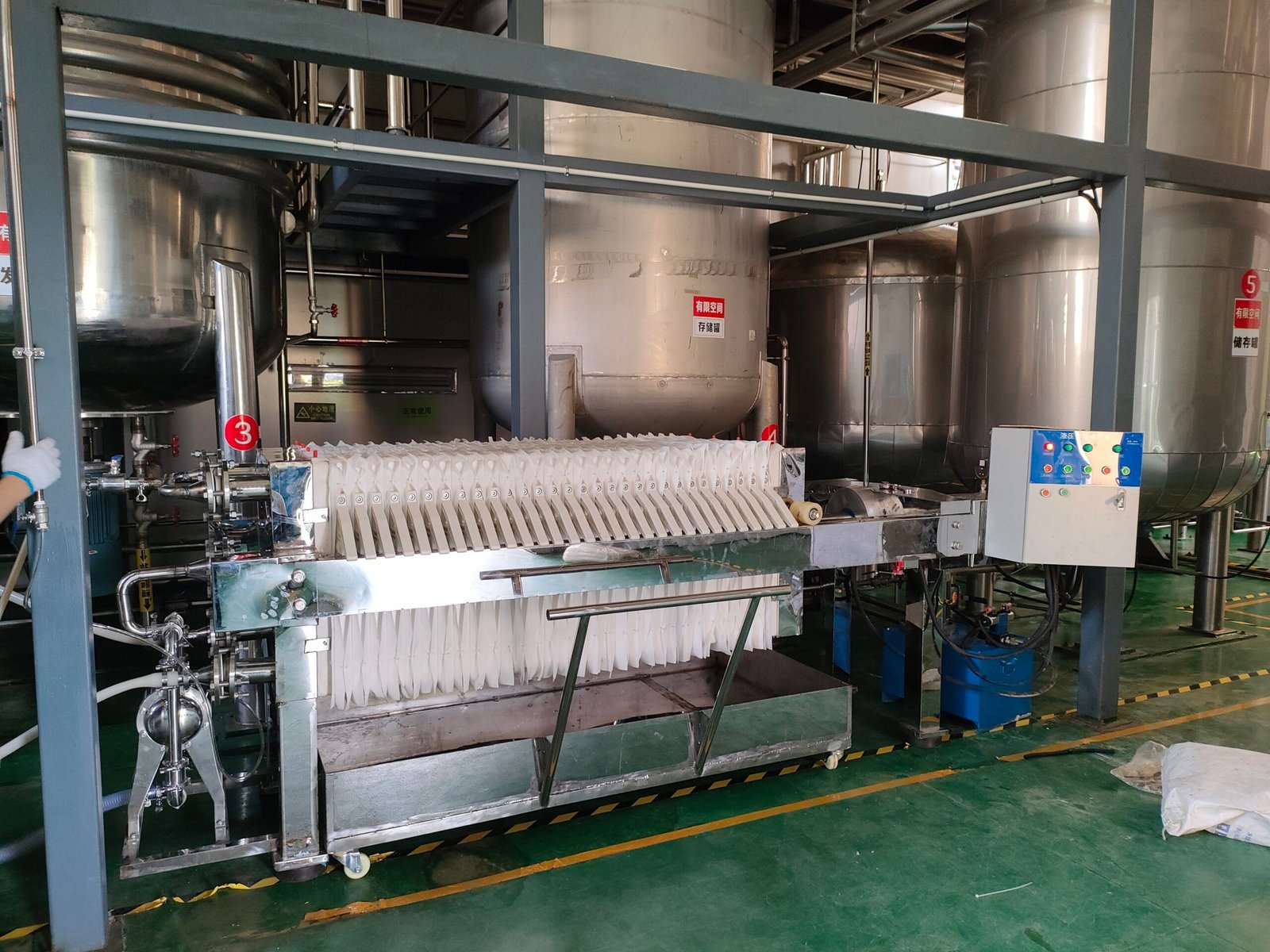
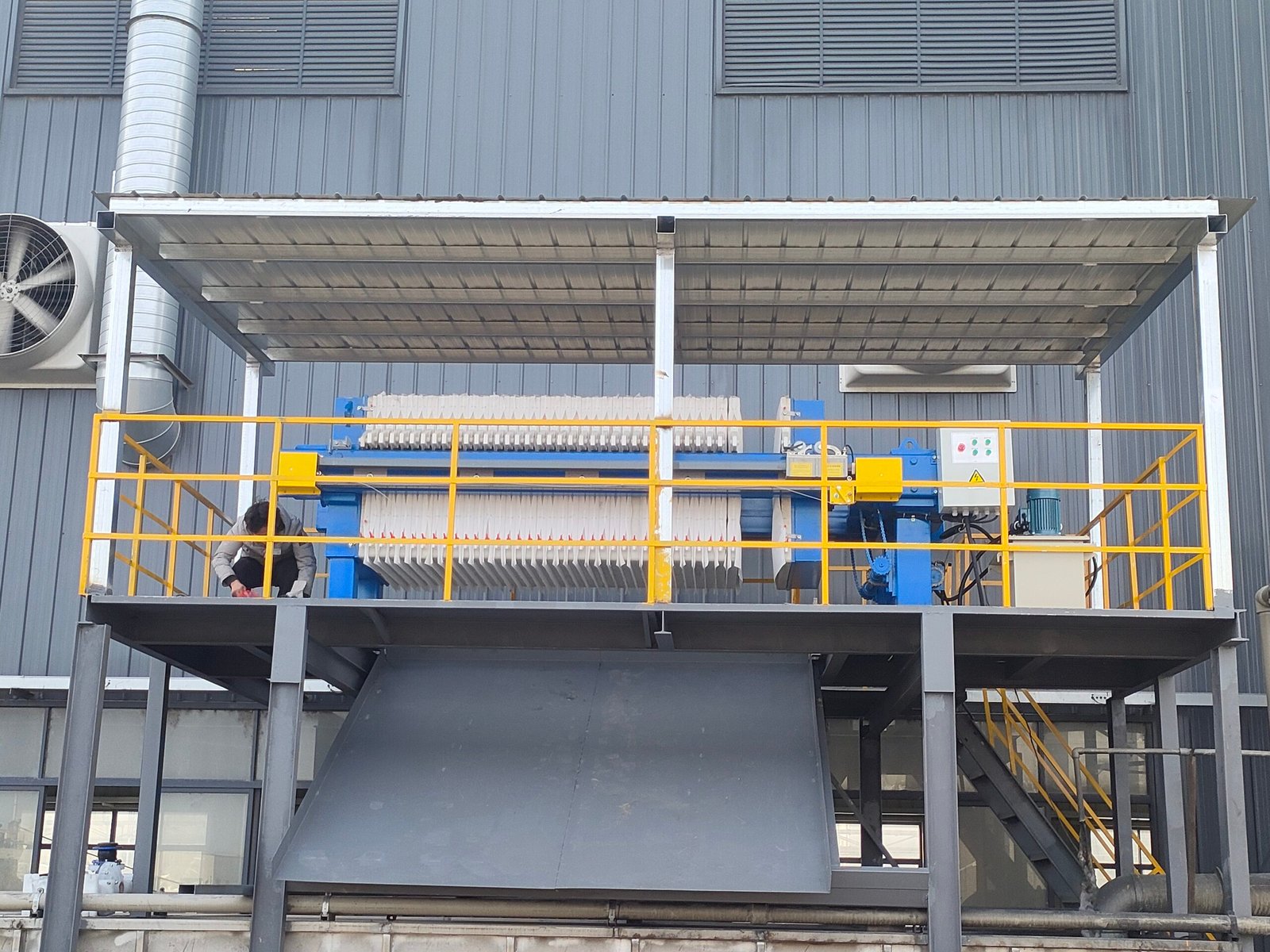
Filtropressa a piastre e telai
In breve: Un filtropressa a piastre e cornici alterna piastre piene e cornici cave, così la torta si forma all'interno della cornice e può essere lavata e scaricata facilmente. Funziona fino a 0,6 MPa ed è adatto alla chiarificazione di olio alimentare, succo, sciroppo, vino, prodotti farmaceutici e prodotti chimici fini. Senjie offre filtropresse a piastre e cornici da 320–1250 mm con area da 1–200 m² in PP, ghisa o acciaio inossidabile.
Risposta rapida: A plate and frame filter press stacks alternating solid plates and open frames; slurry is pumped into the frames, filtrate passes through cloth on both faces of each plate, and the cake forms inside the frame where it can be washed, blown dry and lifted out intact. It is the right choice for small batches, thin cakes (20–50 mm), cake washing and clarification of oils, juices, syrups, wine and fine chemicals. For large daily sludge volumes a chamber (recessed-plate) press is normally the better buy.
Principali cifre in sintesi
- Plate sizes: 320, 400, 500, 630, 800, 1000 and 1250 mm
- Filtration area: about 1–200 m² per press, set by plate size and number of frames
- Frame thickness (cake thickness): 20–50 mm, chosen for your solids load and cycle
- Feed pressure: typically 0.3–0.6 MPa, lower than a chamber press because the frame seal is a gasket, not a moulded plate edge
- Plate and frame materials: reinforced polypropylene, cast iron, or 304 / 316 stainless steel for food, pharma and corrosive liquids
- Closing: manual screw, mechanical jack or hydraulic; cake removed by hand or by opening plate by plate
Come funziona un filtro pressa a piastre e telai
Plates and frames hang alternately on side bars. A filter cloth covers each plate, so every frame becomes a closed chamber bounded by cloth on both sides. The feed pump fills the frames through the corner inlet holes; liquid passes through the cloth into the drainage grooves of the plates and leaves through the filtrate outlets, while solids stay in the frame and build a cake from both faces inward.
When the frame is full, or when filtrate flow falls off, feeding stops. If the cake needs washing, wash water is fed through the wash plates so it crosses the whole cake thickness. Compressed air can then blow the cake drier. The press is opened, frames are separated one by one and the cake is dropped or lifted out as a whole slab.
Cycle time is usually 30 minutes to a few hours depending on slurry filterability and cake thickness. Filtrate clarity is high because the first liquid can be recycled until the cake layer has formed.
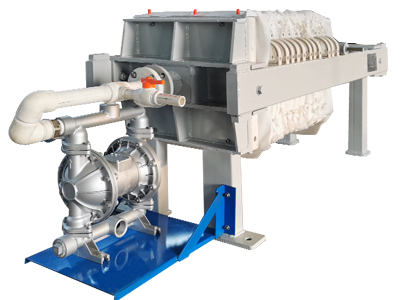
Plate and Frame vs Chamber vs Membrane Filter Press
| Digitare | How the chamber is formed | Ideale per | Limiti |
|---|---|---|---|
| Plate and frame | Solid plate + open frame + solid plate; cake fills the frame | Small batches, cake washing, clarification of oils, juice, wine, syrup, pharmaceutical liquids; laboratory and pilot work | Lower feed pressure (0.3–0.6 MPa), more cloth to handle, slower opening, cakes usually removed by hand |
| Chamber (recessed plate) | Two recessed plates face each other; the recess is the chamber | Daily sludge and tailings dewatering, chemical and ceramic slurry, 630–2000 mm plates, automatic operation | Cake thickness fixed by the recess; cake washing is less uniform |
| Membrana (diaframma) | Chamber press with inflatable plate faces that squeeze the cake | Driest cake, shortest cycle, high-value concentrates and expensive disposal | Higher plate cost; needs squeeze water or air system |
Rule of thumb: if you produce less than a few tonnes of dry solids a day, need to wash the cake, or need a clear filtrate rather than a dry cake, plate and frame is the economical answer. If dewatering volume is the goal, compare the filtropressa a camera e il Filtropressa a membrana, or read which filter press to buy for sludge dewatering.
Typical Configurations by Plate Size
| Dimensione della piastra | Filter area per frame (approx.) | Typical number of frames | Cake volume per frame at 30 mm | Servizio tipico |
|---|---|---|---|---|
| 320 mm | 0.15 m² | 5–20 | about 0.002 m³ | Laboratory, pilot plant, small oil and syrup lots |
| 400 mm | 0.25 m² | 8–30 | about 0.004 m³ | Small food, wine and pharmaceutical batches |
| 500 mm | 0.4 m² | 10–40 | about 0.006 m³ | Edible oil refineries, chemical intermediates |
| 630 mm | 0,6 m² | 10–60 | circa 0,01 m³ | Fine chemicals, dye and pigment cake washing |
| 800 mm | 1,0 m² | 15–80 | circa 0,015 m³ | Plating and metal-finishing sludge, starch and gluten |
| 1000 mm | 1,6 m² | 20–100 | circa 0,025 m³ | Larger chemical and food plants |
| 1250 mm | 2,5 m² | 30–120 | circa 0,04 m³ | Highest-capacity plate and frame duty; above this, use a chamber press |
These are engineering ranges, not fixed models. Each press is built to your plate size, frame thickness, number of frames, material and closing type. To translate slurry volume into plate count, see Come calcolare la capacità del filtro pressa o small filter presses for small plants.
Plates, Frames and Filter Cloth
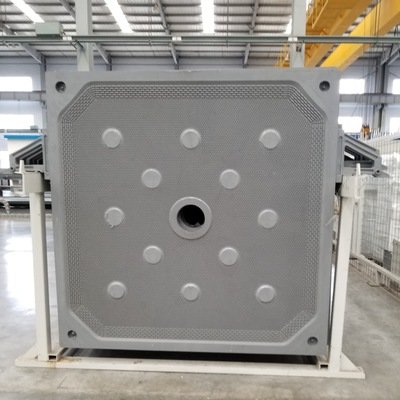
Filter Plates and Frames
Reinforced polypropylene is standard for chemical and wastewater duty; cast iron for high temperature and mechanical strength; 304 or 316 stainless steel for food, beverage and pharmaceutical liquids where hygiene or corrosion rules out PP. Frame thickness sets cake thickness and is chosen with you. See also replacement filter plates.
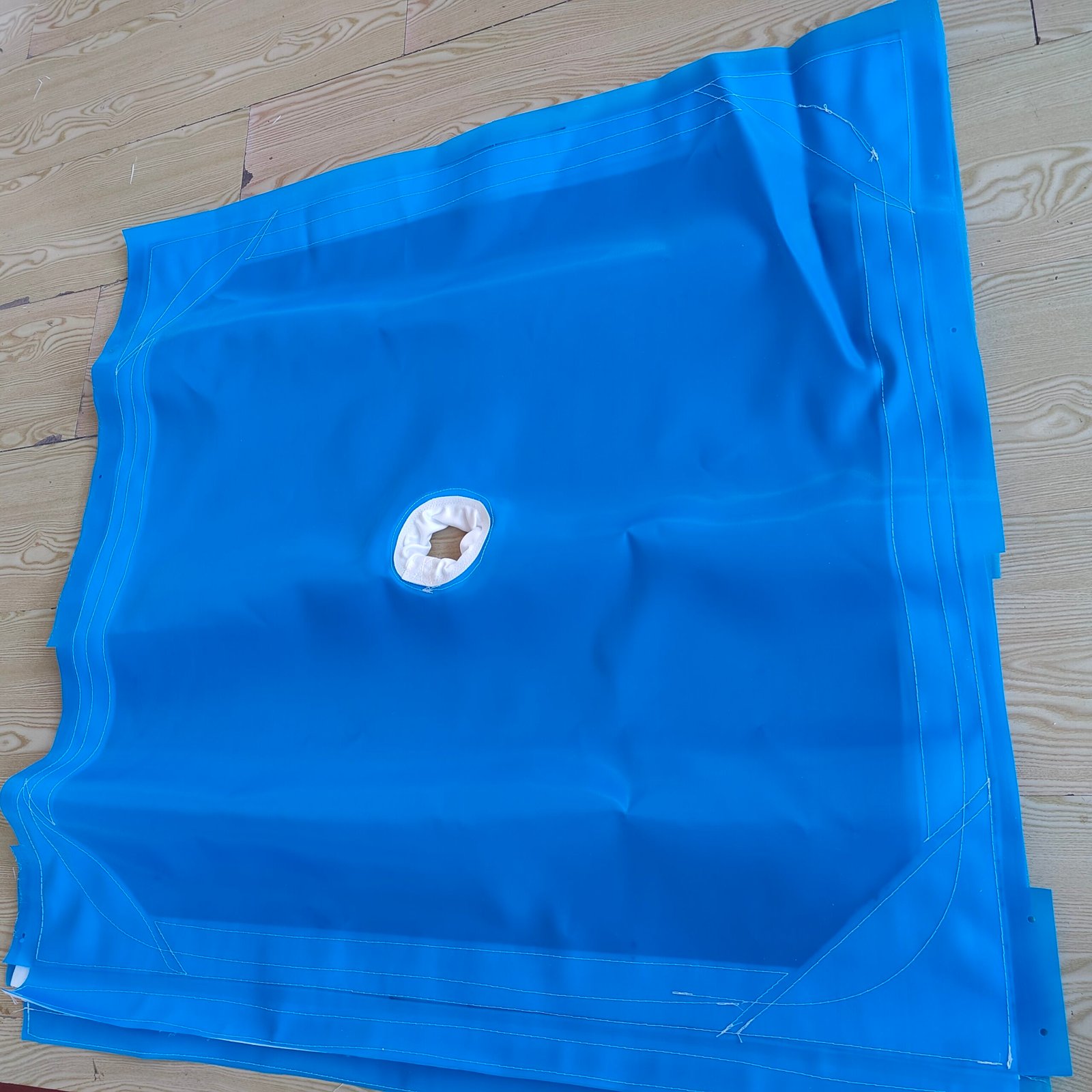
Tessuto filtrante
Polypropylene, polyester or nylon cloth in monofilament, multifilament or spun weave, cut and hemmed to the plate with barrel neck or drape-over fixing. Food-grade cloth is used for oils and juices. Selection depends on particle size, filtrate clarity target and cake release; read the Guida per tele tessuto di filtropressa or browse Tela per filtropressa.
Where a Plate and Frame Filter Press Is Used
Edible oil, juice, syrup and wine
Polishing filtration after pressing or bleaching, with food-grade cloth and stainless plates; clear filtrate is the product and the cake is a by-product. See food and beverage filtration e Tessuto filtrante per uso alimentare.
Pharmaceutical and fine chemical
Recovery of active ingredients, catalysts and pigments where the cake must be washed free of mother liquor and removed intact. See pharmaceutical filter presses e chemical industry filter presses.
Plating, metal finishing and small wastewater plants
Hydroxide sludge from batch treatment tanks, typically a few hundred litres of sludge a day, where a 500–800 mm press run once or twice daily is enough. See Elettroplaccatura e finitura dei metalli.
Laboratory and pilot testing
A 320 mm bench press reproduces full-scale cake formation for filtration trials; see the filtropressa da laboratorio e il nostro filtration testing service.
What to Send for a Quotation
- Liquid or slurry: type, solids content (%), temperature and pH, and whether the filtrate or the cake is the product
- Batch size or daily volume, and how many cycles a day you can run
- Whether the cake must be washed, blown dry or removed intact
- Preferred plate material (PP, cast iron, stainless steel) and any food or pharmaceutical hygiene requirement
- Site voltage and frequency, and whether you want manual, jack or hydraulic closing
A one-litre sample lets us run a bench filtration test and size the press on measured cake thickness, cycle time and filtrate clarity instead of estimates.
Plate and Frame Filter Press FAQ
Qual è la differenza tra un filtro pressa a piastre e telai e un filtro pressa a camere?
In a plate and frame press the cake forms inside a separate open frame between two solid plates, so cake thickness is set by the frame and the cake can be washed and removed whole. In a chamber press the chamber is the recess moulded into each plate, which allows higher feed pressure, faster opening and automatic operation, but less uniform cake washing.
Why is the operating pressure of a plate and frame press lower?
The seal between plate, cloth and frame is a flat gasket surface held by the closing force, so feed pressure is normally limited to about 0.6 MPa. Chamber and membrane presses with moulded plate edges run at 0.6–1.6 MPa. If you need high pressure for a hard-to-filter slurry, choose a chamber or membrane press.
Can the filter cake be washed in a plate and frame filter press?
Yes. Wash plates with a separate wash-water inlet send water across the full cake thickness, which is why plate and frame presses are preferred when the cake must be freed of mother liquor, salts or solvent, for example in pigment, catalyst and pharmaceutical recovery.
What plate materials are available?
Reinforced polypropylene for most chemical and wastewater duty, cast iron for high temperature and mechanical load, and 304 or 316 stainless steel for food, beverage and pharmaceutical liquids. Cloth is chosen separately to match the liquid and the required filtrate clarity.
How do I size a plate and frame filter press?
Start from the solids produced per batch or per day, divide by the cake volume one frame holds (for example about 0.01 m³ for a 630 mm frame at 30 mm thickness) and by the number of cycles a day you can run. Then check the filtration area against the slurry filterability. A bench test on your sample removes most of the guesswork.
Foto di filtropresse a piastre e telai dalla nostra fabbrica