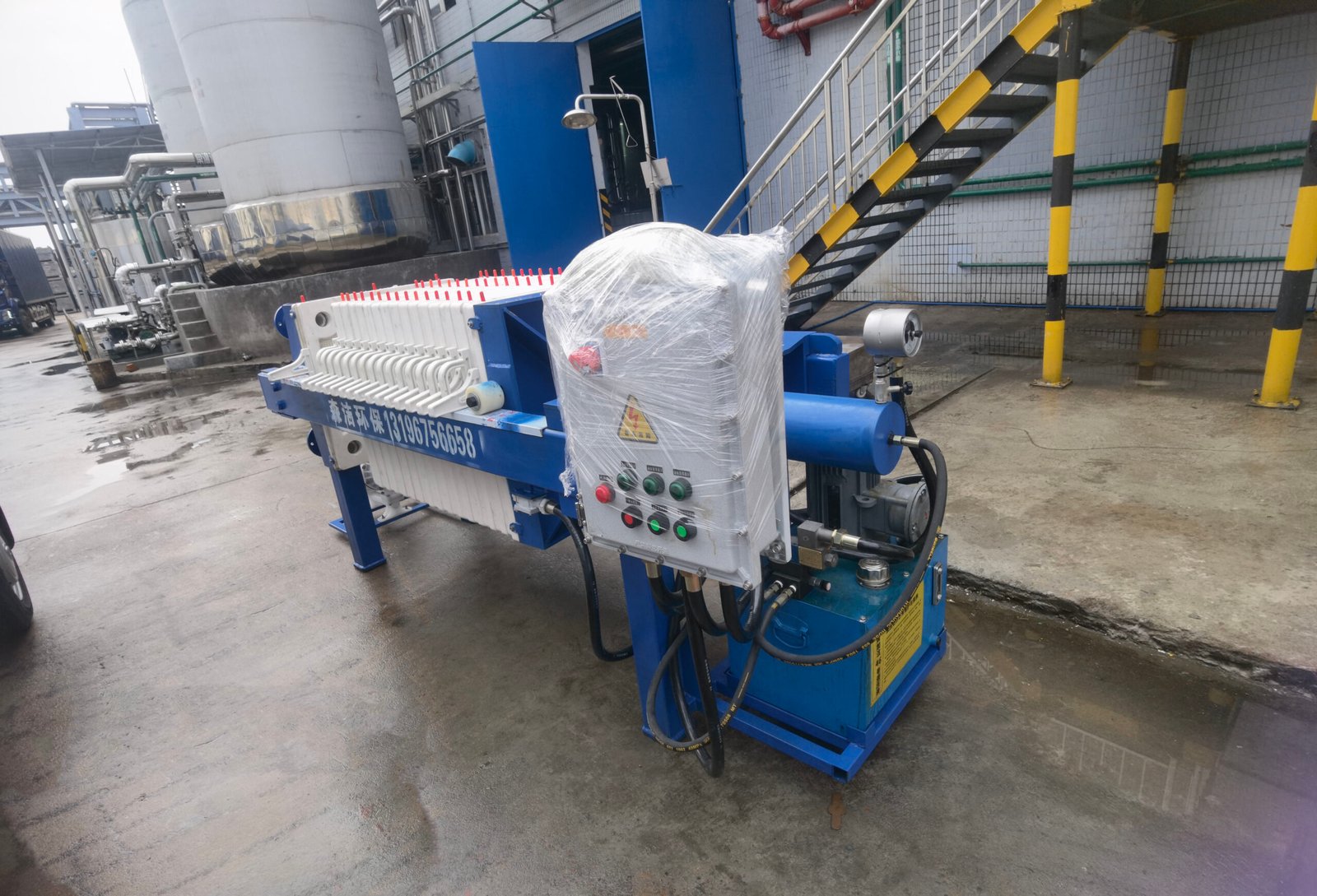
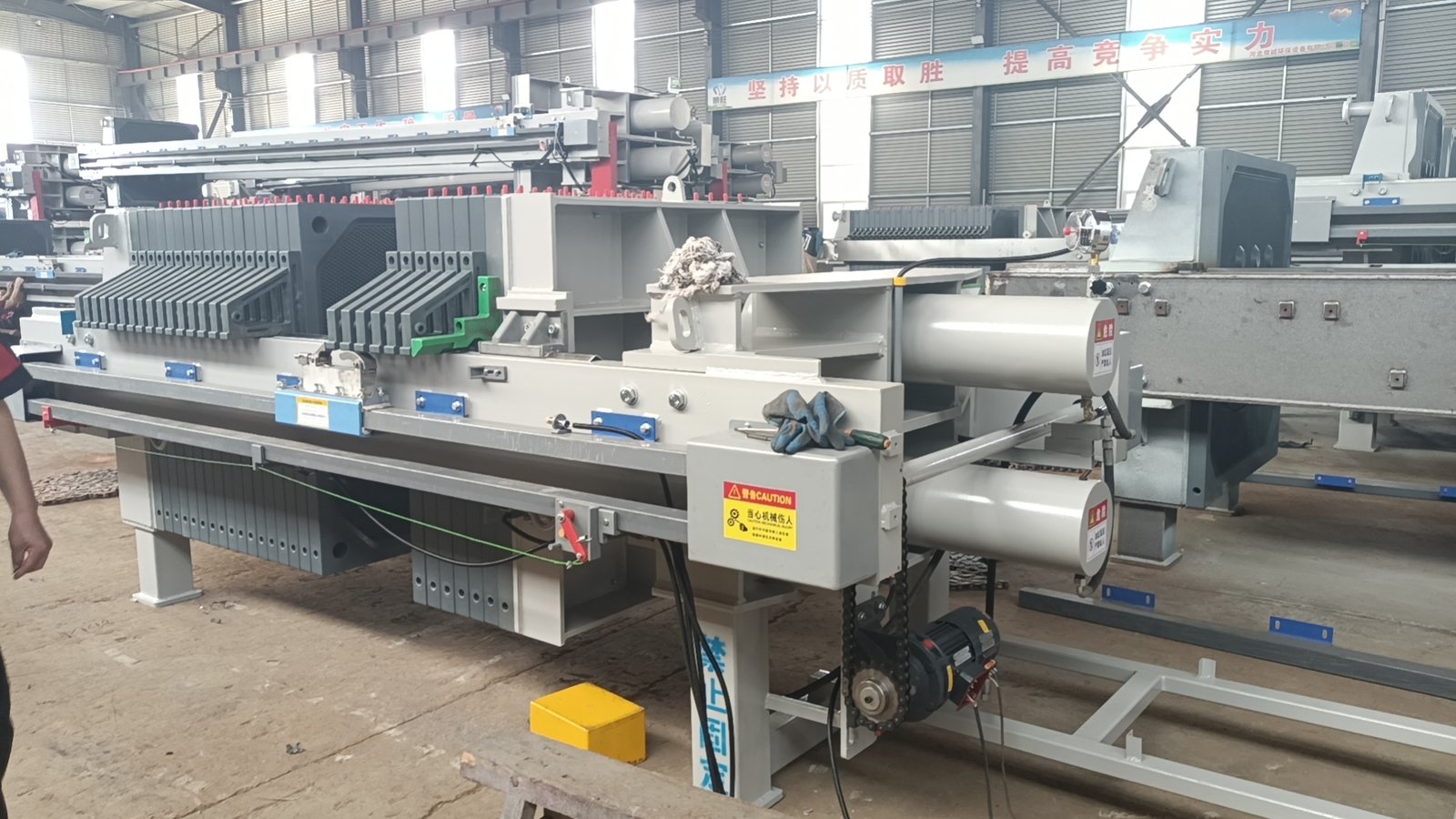
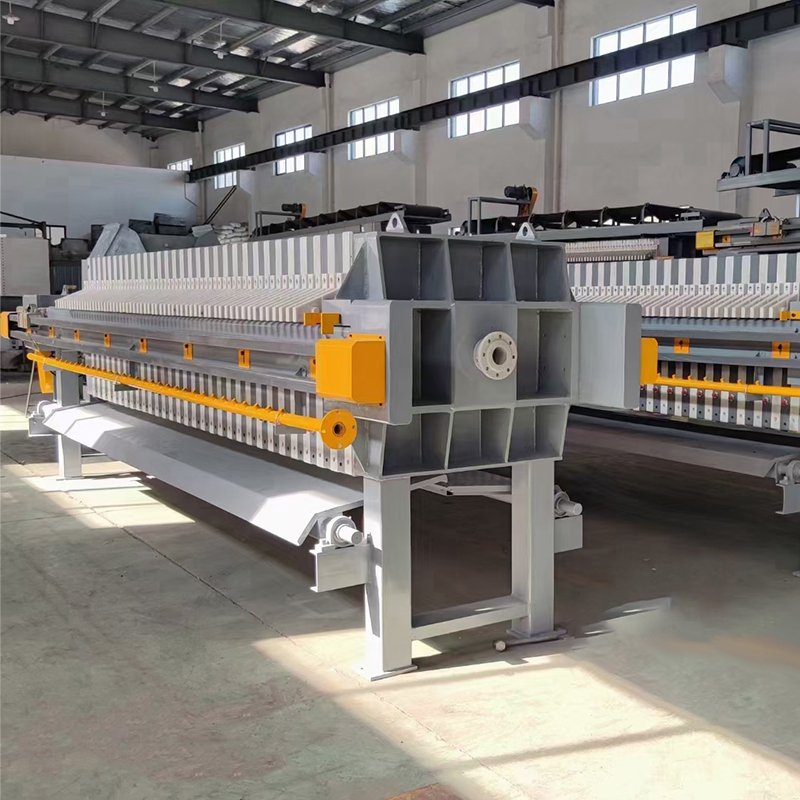
Membranfilterpresse
Kurz gesagt: Eine Membranfilterpresse (Diaphragmenfilterpresse) fügt eine zweite Pressstufe hinzu: Nach der Filtration werden die Membranen hinter jeder Platte auf 1,2–2,0 MPa aufgeblasen, wodurch der Kuchen auf 15–30 % Feuchtigkeit gepresst wird, in einem Zyklus, der 30–50 % kürzer ist als bei einer Kammerfilterpresse. Senjie liefert Membranpressen mit 800–2000 mm und 10–800 m² Fläche für die Entwässerung von Konzentrat und Tailings sowie für die chemische, Lebensmittel- und Pharmafiltration.
Diaphragm squeeze for the driest cake and the shortest cycle
Membrane (diaphragm) filter presses with 630–2000 mm plates, 0.8–1.6 MPa squeeze pressure and manual, semi-automatic or PLC-automatic operation, for mining concentrates and tailings, chemical, ceramic and municipal sludge and food-processing slurries.
- Mining concentrate and tailings dewatering
- Chemical, dye and pigment sludge
- Kommunaler und industrieller Klärschlamm
- Kaolin, ceramic, stone-cutting and sand-washing slurry
- Starch, gluten, brewery and other food by-products
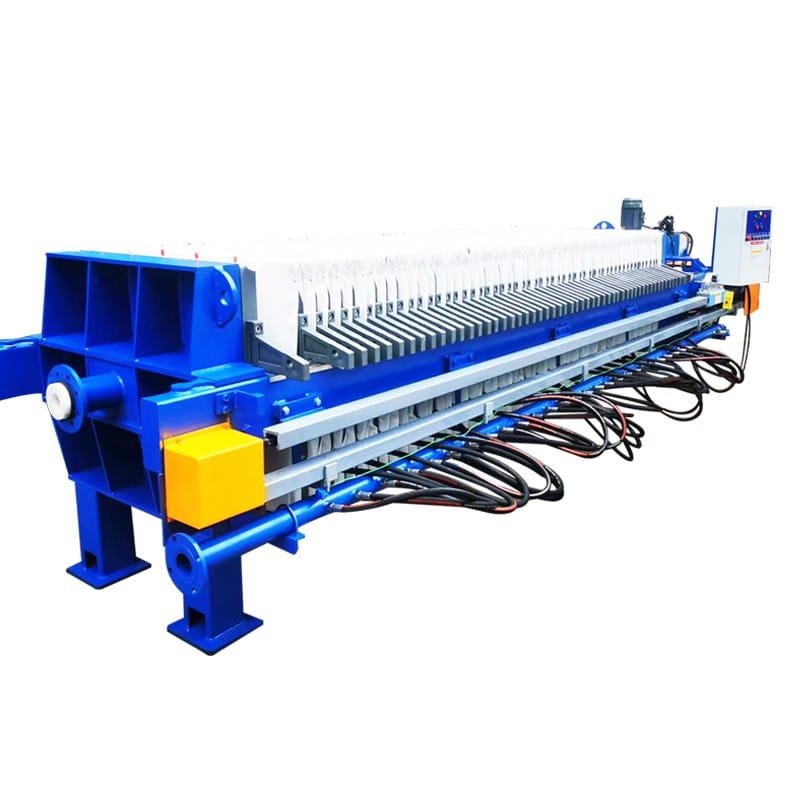
Kurze Antwort: A membrane filter press is a chamber filter press whose plates carry a flexible membrane on each face. After the normal filtration stage, water or compressed air is pumped behind the membranes so they inflate and squeeze the cake, driving out water that filtration pressure alone cannot remove. Compared with a plain chamber press on the same slurry it typically cuts cake moisture by a further 5–15 percentage points and shortens the cycle, at a higher plate cost. Choose it when disposal, drying, transport or product-recovery cost makes every point of moisture worth money.
Wichtige Zahlen auf einen Blick
- Plate sizes: 630, 800, 1000, 1250, 1500 and 2000 mm; filtration area from a few m² to about 800 m²
- Feed pressure: 0.6–1.0 MPa; membrane squeeze pressure: typically 0.8–1.6 MPa (higher-pressure plates on request)
- Squeeze medium: water (most common) or compressed air
- Plate options: full membrane pack, or mixed pack of alternating membrane and chamber plates to lower cost
- Membrane types: replaceable (rubber or TPE membrane clamped to a PP core) or integral (membrane welded to the plate)
- Operation: manual, semi-automatic, or PLC-automatic with plate shifter, cake-drop shaker and cloth washing
How a Membrane Filter Press Works
- Closing. The hydraulic cylinder presses the plate pack together so the cloth edges seal each chamber.
- Feed and filtration. The feed pump fills the chambers at 0.6–1.0 MPa; filtrate passes through the cloth and drains away while the cake builds up on both cloth faces.
- Squeeze. Feeding stops and water or air is pumped behind the membranes at 0.8–1.6 MPa. The membranes inflate, compress the cake evenly over its whole face and press out most of the remaining pore water. Squeeze usually lasts 5–20 minutes.
- Optional core blow and cake wash. Compressed air clears the feed core; wash water can be pushed through the cake while it is held under squeeze, which gives a much more uniform wash than in a plain chamber press.
- Opening and discharge. The squeeze medium is released, the press opens and the plate shifter moves the plates one by one so the cakes drop.
Because the cake is compressed mechanically instead of relying on ever-longer filtration, the press can be opened earlier: the same tonnage needs fewer or smaller presses, or the existing press handles more batches a day.
Membrane vs Chamber vs Plate and Frame Filter Press
| Typ | Cake moisture on the same slurry | Zyklus | Tellerkosten | Choose when |
|---|---|---|---|---|
| Membran | Lowest: typically 5–15 points below a chamber press | Shortest; squeeze replaces the slow tail of filtration | Höchste | Disposal, drying or freight cost is high; cake must be handled, stored or sold dry; cake washing must be uniform |
| Chamber (recessed plate) | Standard | Longer, filtration only | Standard | General sludge and slurry dewatering where a 60–75% moisture sludge cake or 15–30% mineral cake is acceptable; see the Kammerfilterpresse |
| Plate and frame | Standard, thin cake | Long, manual | Niedrigste | Small batches, clarification, intact cake removal; see the Platten- und Rahmenfilterpresse |
For the plate-level difference, read Eingelassene Platte vs. Membranplatte; for the process view, read how membrane squeeze reduces cake moisture.
Typical Configurations by Plate Size
| Plattengröße | Filterfläche pro Kammer (ca.) | Typische Anzahl der Kammern | Kuchenvolumen pro Kammer bei 30 mm | Typische Aufgabe |
|---|---|---|---|---|
| 630 mm | 0,6 m² | 10–40 | etwa 0,01 m³ | Pilot plants, small chemical and food lines |
| 800 mm | 1,0 m² | 15–60 | etwa 0,015 m³ | Plating, dye and pigment sludge, kaolin |
| 1000 mm | 1,6 m² | 20–80 | etwa 0,025 m³ | Municipal and industrial sludge, stone and sand slurry |
| 1250 mm | 2,5 m² | 30–100 | etwa 0,04 m³ | Mineral concentrates, larger wastewater plants |
| 1500 mm | 3,7 m² | 40–120 | etwa 0,055 m³ | Coal slurry, tailings, ceramic plants |
| 2000 mm | 6,5 m² | 60–150 | etwa 0,1 m³ | Large mine concentrate and tailings duty |
These are engineering ranges, not fixed models: each press is configured from your daily dry solids, target cake moisture and cycles per day. A mixed pack (membrane plate, chamber plate, membrane plate…) gives most of the squeeze benefit at lower cost and is the usual starting proposal. Sizing help: Wie berechnet man die Kapazität einer Filterpresse?.
Where a Membrane Filter Press Pays Back
Bergbaukonzentrat und Tailings
Copper, gold, lead-zinc and iron concentrates need low transport moisture; tailings need a stackable dry cake. See Bergbau-Absetzbecken-Entwässerungsfilterpresse und Tailings- und Konzentratentwässerung.
Kommunaler und industrieller Schlamm
Lower cake moisture cuts landfill weight and lets cake go to drying or incineration with less fuel. See Abwasser-Schlammentwässerung und reducing cake moisture below 30%.
Kaolin, ceramic, stone and sand washing
Fast-filtering mineral slurries where a short cycle matters more than a few points of moisture; the squeeze also gives a firmer cake for handling. See Stein und Baumaterialien.
Chemical, dye, pigment and food by-products
Where the cake is a product or an intermediate, uniform squeeze washing removes mother liquor and salts more completely; PP or stainless construction and food-contact cloth are available. See chemical industry filter presses und food and beverage filtration.

Main Components
Membranplatten
- Reinforced polypropylene core with rubber or TPE membranes on both faces; replaceable membranes are repaired plate by plate, integral membranes are lighter and cheaper
- Mixed packs alternate membrane and chamber plates
- Replacement plates: Filterplatten
Filtergewebe
- Polypropylene or polyester monofilament and multifilament cloth chosen for particle size, cake release and squeeze duty; barrel-neck or drape-over fixing
- Siehe Filtertuch für Filterpresse und die Stoffauswahl-Leitfaden
Quetschsystem
- Water: squeeze pump, pressure-holding valve and return tank; air: compressor and receiver
- Squeeze pressure, hold time and release are set on the control panel
Hydraulic closing and automation
- Manual, semi-automatic or PLC-automatic hydraulic station; automatic plate shifter, cake-drop shaker, drip trays and cloth washing on request
- Feed pumps: how to choose a filter press feed pump
Typical Membrane Filter Press Applications
Four duties where customers most often choose the membrane press over a chamber press, and what the squeeze stage does in each. Project-specific figures are given in the quotation for your slurry, not as generic claims.
Automotive parts and metal-finishing plant
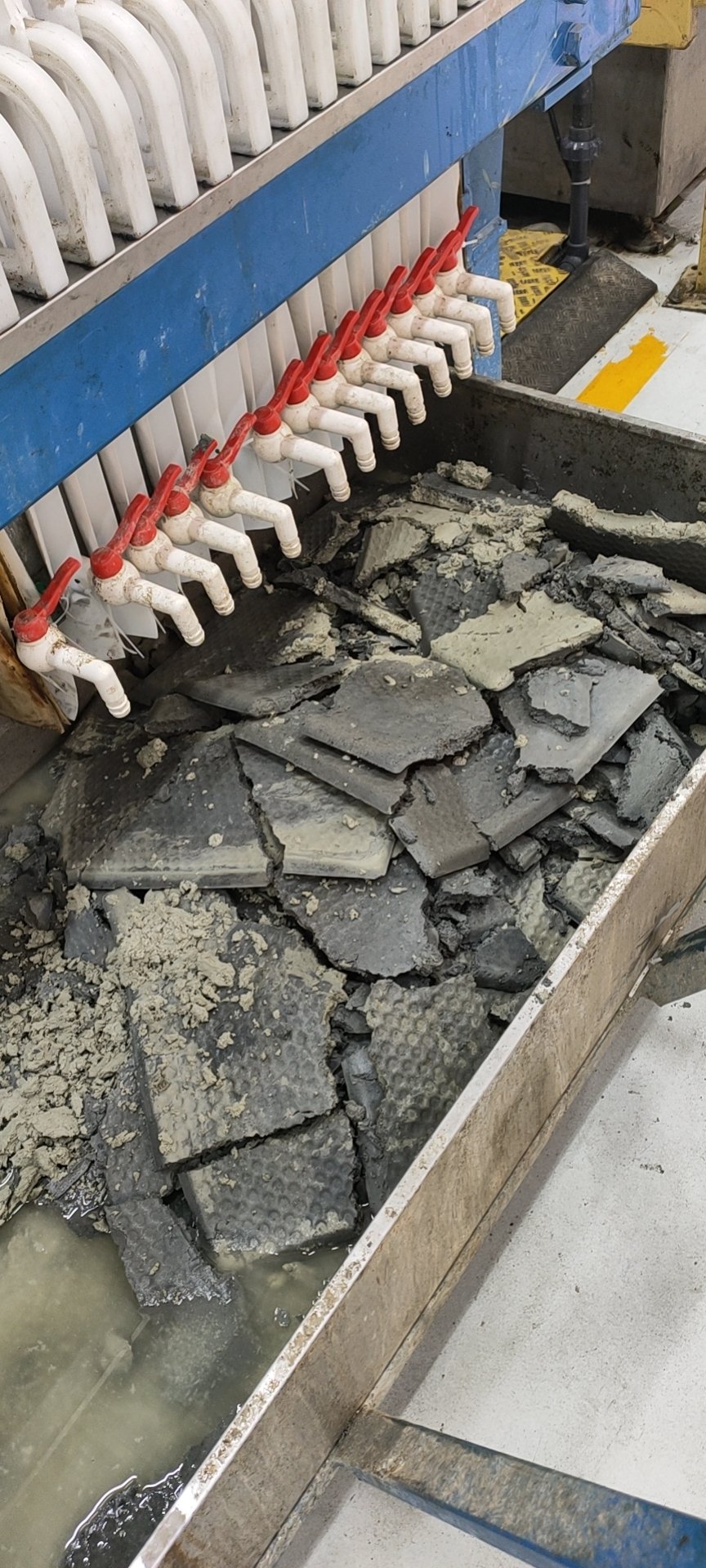
Phosphating, painting and plating wastewater produce a hydroxide sludge that is expensive to dispose of by weight. A membrane press squeezes the gelatinous cake to a drier, firmer slab, so fewer skips leave the site and cake can be stored without seepage.
Edible oil refinery
Spent bleaching earth and filter aid hold a lot of oil. Stainless-steel or PP membrane plates with food-contact cloth press the cake hard, recovering more oil into the filtrate and leaving a drier, safer cake for disposal.
Municipal wastewater treatment plant
Thickened biological sludge of 2–4% solids is conditioned with polymer and dewatered; the squeeze stage takes the cake past what a chamber press reaches, cutting the tonnage hauled to landfill or the fuel needed for drying. See sizing a municipal sludge filter press.
Pharmaceutical and fine-chemical manufacturer
Enclosed presses with drip trays and cake washing under squeeze remove mother liquor uniformly and keep the product contained; PP or stainless construction and validated cloth are chosen for the process.
What to Send for a Quotation
- Slurry type, solids content (%), particle size if known, temperature and pH
- Daily volume or tonnes of dry solids, and how many hours a day the press can run
- Target cake moisture and what happens to the cake (landfill, drying, sale, backfill)
- Current dewatering equipment and its cake moisture, if any
- Site voltage and frequency, space available, and manual or automatic operation
Send a slurry sample and we run a Filtrationstest with and without squeeze, so the quotation states measured cake moisture and cycle time for your material.
Membrane Filter Press FAQ
What is the difference between a membrane filter press and a chamber filter press?
Both form the cake in chambers between recessed plates. A membrane press adds a flexible membrane on each plate face and a squeeze stage after filtration, which compresses the cake and removes water that feed pressure alone cannot. The result is a drier cake and a shorter cycle at a higher plate cost.
How much drier is the cake from a membrane filter press?
On most slurries the squeeze stage removes a further 5–15 percentage points of moisture compared with a chamber press on the same material. The exact figure depends on particle size, cake compressibility and conditioning, which is why we test your sample before quoting a moisture figure.
Water or air squeeze: which should I choose?
Water squeeze is the standard: it is incompressible, so pressure is held steadily and safely, and the system is simple. Air squeeze avoids water in the plate pack and suits sites with a large compressed-air supply or where freezing is a concern, but it needs a larger air system and more care with pressure release.
Can I mix membrane plates and chamber plates?
Yes. A mixed pack alternates one membrane plate with one chamber plate, so every chamber is squeezed from one side. It gives most of the moisture benefit at roughly half the membrane-plate cost and is the usual first proposal; a full membrane pack is used when the lowest possible moisture is required.
Can an existing chamber filter press be converted to a membrane press?
Often, if the frame, hydraulic closing force and plate size match the squeeze pressure. The chamber plates are replaced by membrane plates (or a mixed pack) and a squeeze pump or air system with control valves is added. Send us the press make, plate size, plate count and closing pressure and we check it.
What squeeze pressure do membrane plates use?
Standard membrane plates squeeze at about 0.8–1.6 MPa; higher-pressure plates are available for very compressible cakes. Feed pressure stays at 0.6–1.0 MPa. The frame and hydraulic system are sized for the squeeze pressure, not just the feed pressure.
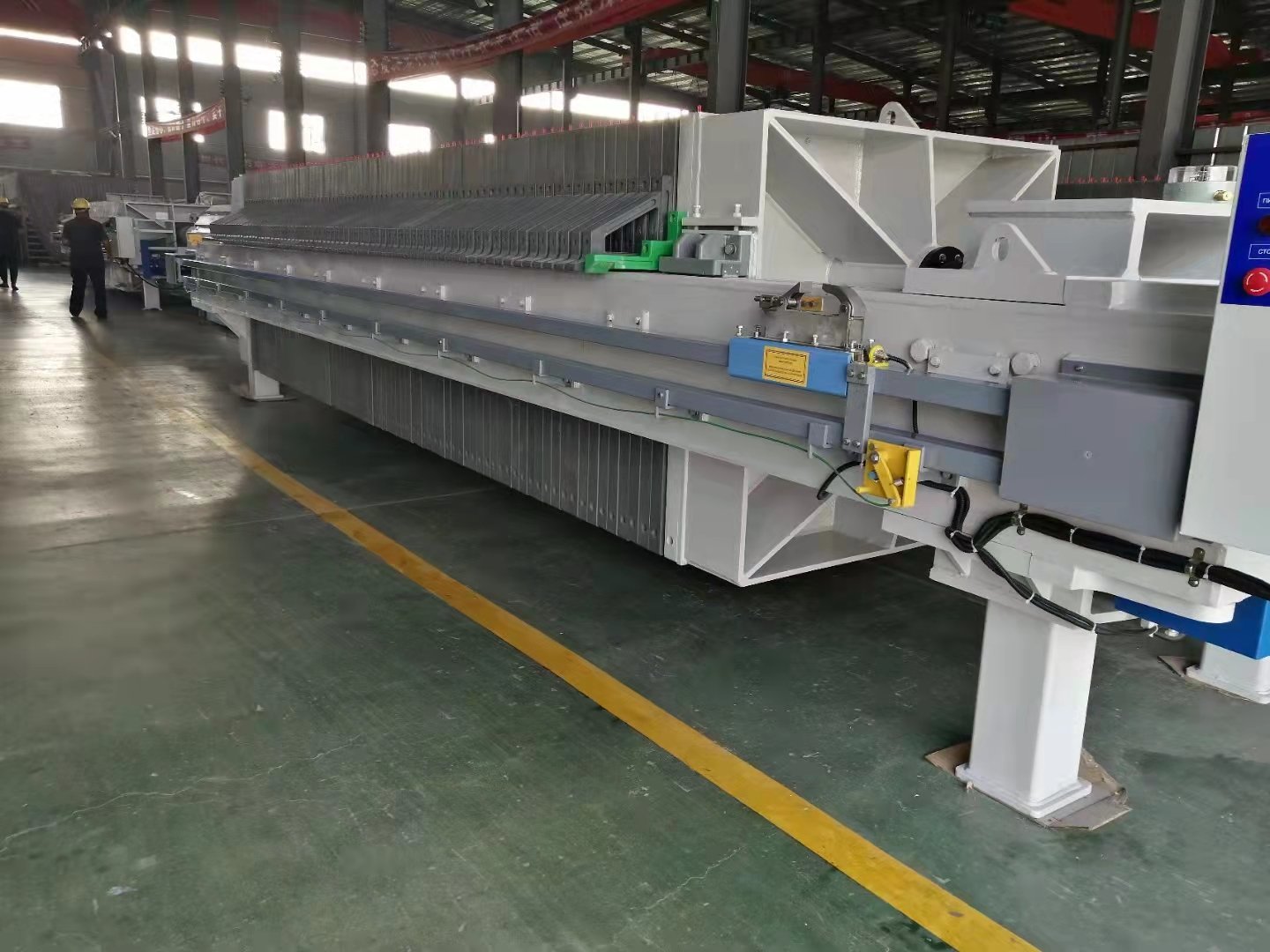
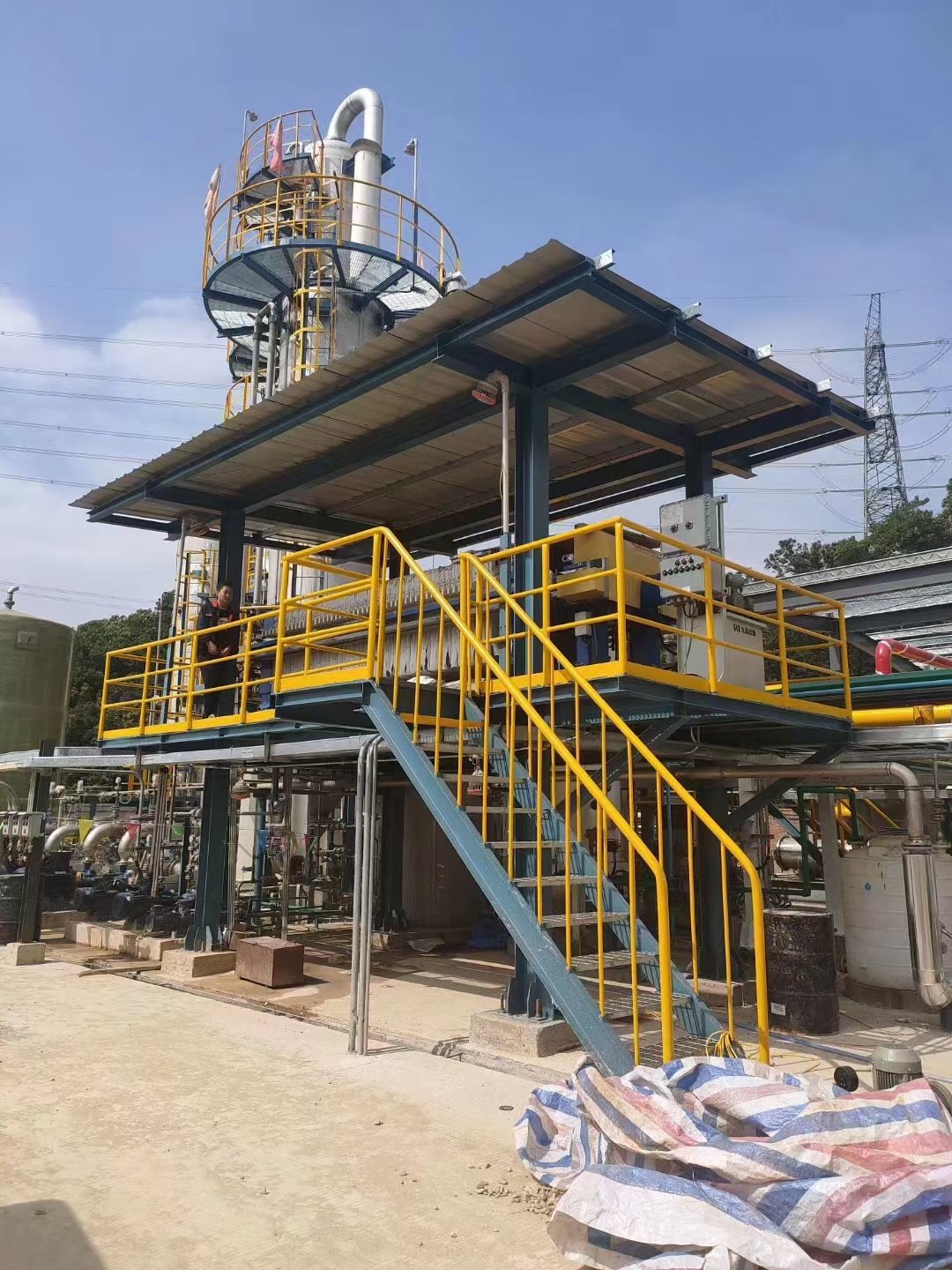
Membranfilterpressen-Fotos aus unserer Fabrik