Ceramic Plunger Pump for Filter Press Feeding

The Senjie Ceramic Plunger Pump is purpose-built for chamber filter presses, membrane filter presses, and other industrial filtration systems. Featuring a wear-resistant ceramic plunger design, this pump delivers stable, high-pressure feeding for efficient solid-liquid separation, sludge dewatering, and wastewater treatment. As an essential filter press accessory, it provides outstanding performance in harsh operating conditions, especially with abrasive or corrosive slurries common in mining, ceramics, chemical, and environmental industries.
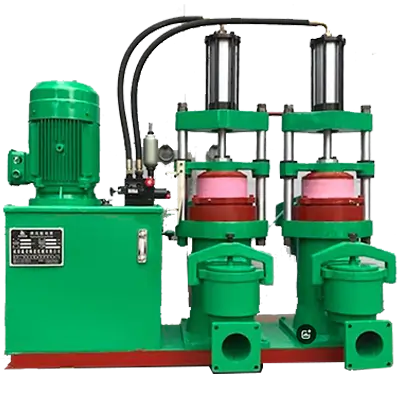
Ceramic Plunger Pump for Filter Press

Main Features of Ceramic Plunger Pump

  • Specifically engineered as a ceramic plunger pump for filter press feeding, compatible with both chamber and membrane filter press systems
  • Ceramic plunger construction delivers superior resistance to abrasion and corrosion, making it ideal for aggressive and high-solids slurries
  • High pressure and stable flow, ensuring optimal solid-liquid separation and maximum filter press efficiency
  • Heavy-duty cast iron housing with ceramic plunger for long service life and reliable operation in tough environments
  • Simple structure, easy maintenance, and low operating costs
  • Widely used in mining, ceramics, chemical, food, and wastewater treatment applications

Typical Technical Parameters

  • Flow Rate: 1 – 60 m³/h (customizable to filter press system requirements)
  • Max Pressure: 0.6 – 2.5 MPa (suitable for chamber and membrane filter press feeding)
  • Material: Cast iron body with ceramic plunger, or optional stainless steel for high-corrosion applications
  • Motor Power: 3 – 55 kW, suitable for different filter press pump setups
  • Inlet/Outlet Size: DN50 – DN150, compatible with standard filter press piping
  • Perfect for solid-liquid separation, ceramic slurry transfer, sludge dewatering, and industrial wastewater treatment
ModelRated Flow (m³/h)Pressure Range (MPa)Strokes (per min)Stroke (mm)Motor Power (kW)Dimensions (mm)Suction/Discharge Pipe Dia (mm)Suitable Filter Press Volume (m³)
YB75-Single0.70–2.5212203870×740×1450Φ45 (45)2–10
YB85-Single1.50–2.51522031000×900×1400Φ48 (48)2–10
YB85-Double30–2.51522041300×1050×1400Φ48 (48)5–15
YB110-Single2.30–2.51625041000×1050×1560Φ50 (50)5–15
YB110-Double4.50–2.5242504 (5)1100×1250×1560Φ50 (50)10–30
YB140-Single50–2.5232507.51400×1100×1650Φ78 (60)10–30
YB140-Double100–2.5232507.51700×1250×1700Φ78 (60)30–80
YB140-Double120–2.526250111700×1250×1700Φ78 (60)30–80
YB200-Double190–2.52225018.51900×1400×1900Φ108 (108)80–200
YB250-Double300–2.018250222400×1300×1900Φ108 (108)80–200
YB300-Double450–2.015250301950×1900×2000Φ159 (133)200–300
YB300-Extended600–2.013350371950×1900×2300Φ159 (133)200–300
YB350-Double800–2.012430552300×2100×2600Φ159 (159)200–300

Quick answer: A ceramic piston pump delivers the highest feed pressure of the four pump types and resists abrasion better than any of them, because the ceramic plunger is harder than the particles passing it. It is the pump for the high-pressure finish on 1.6 MPa and membrane presses, and for abrasive slurry that destroys other wet ends.

Specification

ParameterTypicalNotes
PrinciplePositive displacement plunger pump with ceramic plungersFlow proportional to stroke rate
PressureHighest of the four types; suits 1.6 MPa high-pressure and membrane pressesHolds pressure as the press fills, unlike a centrifugal pump
AbrasionHighest resistance — the ceramic plunger outlasts steel by a wide marginChosen for mineral, stone and ceramic slurry
SolidsHighValve design decides the maximum particle size
FlowPulsating, smoothed by an air chamber or damperFit a damper where even cake build matters
DriveHydraulic or mechanicalHydraulic drive gives smoother pressure control
Wear partsPlungers, seals, valve seatsLong intervals, but seals are the routine consumable

Why ceramic, and where it pays

In an abrasive slurry the failure mode is the plunger surface, not the pump body. A steel plunger scores, the seal then leaks, and the pump loses pressure. A ceramic plunger is harder than quartz and most mineral particles, so it polishes rather than scores and keeps the seal face true far longer. On stone-cutting, ceramic-body and mineral concentrate duty this is usually the difference between rebuilding every few months and rebuilding once a year.

The pump earns its cost at the end of the cycle. Once the chambers are packed, only a positive displacement pump can keep pushing filtrate out of the cake, and the drier cake that results is where the money is: cake disposal is charged by weight.

Which feed pump for a filter press?

The feed pump decides whether a filter press cycles cleanly or fights you every batch. Four types cover almost all duty, and the choice follows the slurry, not the press.

PumpSolidsAbrasionMax feed pressurePicks it when
Air-operated diaphragmLow to mediumMediumLimited by air supply, typically to ~0.7 MPaSimple, self-priming, can run dry and stall against a closed press without damage
Progressing cavity (screw)Medium to highMediumHigh, rises with number of stagesViscous, shear-sensitive or polymer-conditioned sludge; smooth, pulsation-free flow
Centrifugal slurryHighVery highLower — flow falls sharply as the press fillsHigh-volume abrasive slurry; often used as a first-stage filling pump
Ceramic pistonHighVery highHighest — suits 1.6 MPa high-pressure and membrane pressesThe final squeeze stage, and abrasive duty that destroys other pump wet ends

A common and economical arrangement pairs two pumps: a centrifugal slurry pump fills the chambers quickly at low pressure, then a piston or progressing cavity pump takes over for the high-pressure finish. One pump sized for both ends of the cycle is usually oversized for the start and underpowered for the finish.

Frequently asked questions

When do I need a ceramic piston pump rather than a cheaper pump?

Three cases: the press is rated above roughly 1.0 MPa and you need the pressure at the end of the cycle; the slurry is abrasive enough to chew through diaphragms or stators; or cake dryness matters commercially because disposal is charged by weight. If none of those apply, a diaphragm or progressing cavity pump is usually the better value.

Does the pulsation matter for cake formation?

It can. A strongly pulsing feed packs the cake unevenly and leaves wetter zones. Fit an air chamber or pulsation damper on the discharge, which smooths the flow enough that cake builds evenly. Hydraulically driven pumps pulse less than mechanically driven ones.

What wears out, and how often?

The routine consumable is the plunger seal set. The ceramic plungers themselves last far longer — they polish rather than score. Valve seats wear on coarse abrasive duty. Watch for pressure falling off at the end of the cycle, which normally means seals rather than plungers.

Can it run against a fully closed press?

It is a positive displacement pump, so it will keep building pressure until something gives. It must have a relief valve or a pressure switch that stops it at the set pressure. Never rely on the press itself to limit the pressure.

Ceramic piston pump or multi-stage progressing cavity pump?

The ceramic piston pump wins on abrasion resistance and on peak pressure. The progressing cavity pump wins on smooth, pulsation-free, low-shear flow, which matters for polymer-conditioned sludge. Abrasive mineral duty points to ceramic; conditioned sludge points to progressing cavity.

What do you need to quote one?

Required feed pressure and flow, slurry solids content, particle size and hardness, slurry chemistry and temperature, the press size and whether it is a membrane press, and whether the pump is filling from empty or only handling the high-pressure finish.

Related

Send your slurry description, flow rate and required feed pressure and we will quote the pump with the press: request a pump quotation.